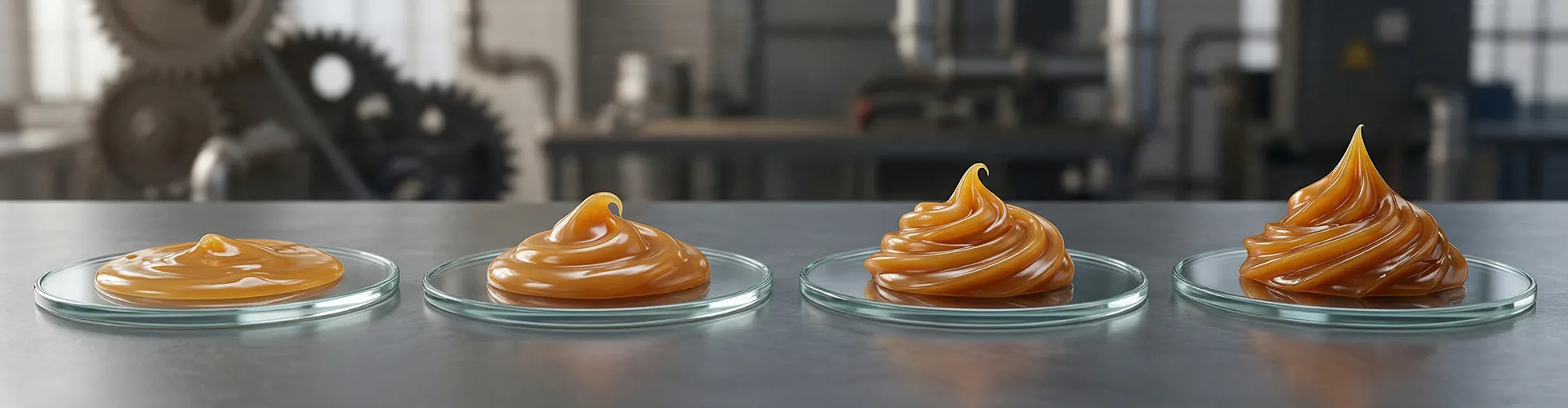
NLGI Grades Explained for Calcium Sulfonate Grease
Calcium sulfonate grease has a strong reputation in demanding industrial environments. It is famous for its exceptional corrosion resistance, load-carrying capacity, and natural EP properties. It is also used in marine, steel, mining, and heavy industrial applications.
One of the most important areas that often causes confusion for buyers and maintenance teams is NLGI grade selection. If the grease formulation itself is excellent, selecting the wrong NLGI grade can lead to poor pumpability, leakage, overheating, or premature component failure.
In this guide, we will break down the NLGI grades specifically for calcium sulfonate grease and explain where each grade is used and help you select the right consistency for your application.
What Is an NLGI Grade?
NLGI (National Lubricating Grease Institute) grades define the consistency of grease, not its quality or performance level. In simple terms, NLGI grade tells you how soft or firm a grease is.
The scale ranges from 000 (very fluid) to 6 (very hard block grease). Most industrial calcium sulfonate grease falls between NLGI 0 and NLGI 2, totally depending on operating conditions and application requirements.
Selecting the right NLGI grade is especially important for calcium sulfonate grease, because these greases are often used in high-load, high-moisture, and high-temperature environments.
Why NLGI Grade Matters for Calcium Sulfonate Grease
Calcium sulfonate grease is behaving differently from conventional lithium greases. It offered:
- High-level of mechanical stability
- Natural EP performance
- Strong corrosion protection
- Excellent water washout resistance
But these advantages will only work as intended when the consistency matches the application.
An incorrect NLGI grade selection can result in:
- Increased friction and wear
- Poor grease circulation
- Inadequate film formation
- Excessive grease leakage
That’s why understanding NLGI grades is important when specifying a calcium sulfonate grease.
Common NLGI Grades for Calcium Sulfonate Grease
NLGI 0 – Semi-Fluid Calcium Sulfonate Grease
Consistency: Very soft, almost fluid
Typical Applications:
- Low-temperature environments
- Enclosed gearboxes
- Centralized lubrication systems
- Systems requiring easy pumpability
NLGI 0 calcium sulfonate grease is ideal where grease must flow easily through lines and distribution systems. It will maintain an excellent EP and corrosion protection while allowing smooth circulation.
This grade is commonly used in:
- Automated lubrication systems
- Steel plants
- Mining conveyors
NLGI 1 – Soft Calcium Sulfonate Grease
Consistency: Soft and spreadable
Typical Applications:
- Bearings operating in cold climates
- Equipment requiring good pumpability
- Moderate-speed industrial machinery
NLGI 1 is a very good balance between flow and retention. It is often selected when NLGI 2 is too stiff, but NLGI 0 is too fluid for the application.
It will perform well in:
- Industrial bearings with moderate loads
- Marine deck equipment
- Agricultural machinery
NLGI 2 – Standard Calcium Sulfonate Grease
Consistency: Firm (most commonly used grade)
Typical Applications:
- Steel mills and cement plants
- Heavy-duty bearings
- Marine and offshore equipment
- Construction and mining equipment
NLGI 2 is the most important grade used for calcium sulfonate grease. It will offer an excellent characteristic while maintaining strong load-carrying and water resistance properties.
This grade is preferred where:
- Exposure to water or chemicals is high
- Equipment operates under shock loads
- Long relubrication intervals are required
NLGI 2 calcium sulfonate grease is the default choice for most industrial users,
NLGI 3 – Firm Calcium Sulfonate Grease
Consistency: Very firm
Typical Applications:
- Applications prone to grease leakage
- High-temperature bearings
- Vertical shafts
NLGI 3 is selected when grease must stay exactly where it is applied, even at elevated temperatures or in vertical installations.
This grade is less common but valuable in:
- Equipment with sealing challenges
- Kiln bearings
- High-heat industrial zones
How to Choose the Right NLGI Grade for Your Application
When you are selecting an NLGI grade for calcium sulfonate grease consider the following factors:
1. Operating Temperature
- High-temperature environments = NLGI 2 or 3
- Cold climates = NLGI 0 or 1
- Normal industrial temperatures = NLGI 2
2. Load Conditions
- Continuous moderate loads = NLGI 1 or 2
- Heavy or shock loads = NLGI 2
3. Lubrication Method
- Sealed-for-life components = NLGI 2 or 3
- Centralized systems = NLGI 0 or 1
- Manual greasing = NLGI 2
4. Environmental Exposure
- Water, salt, chemicals = Calcium sulfonate grease with NLGI grade matched to equipment design
Calcium Sulfonate Grease vs Consistency Myths
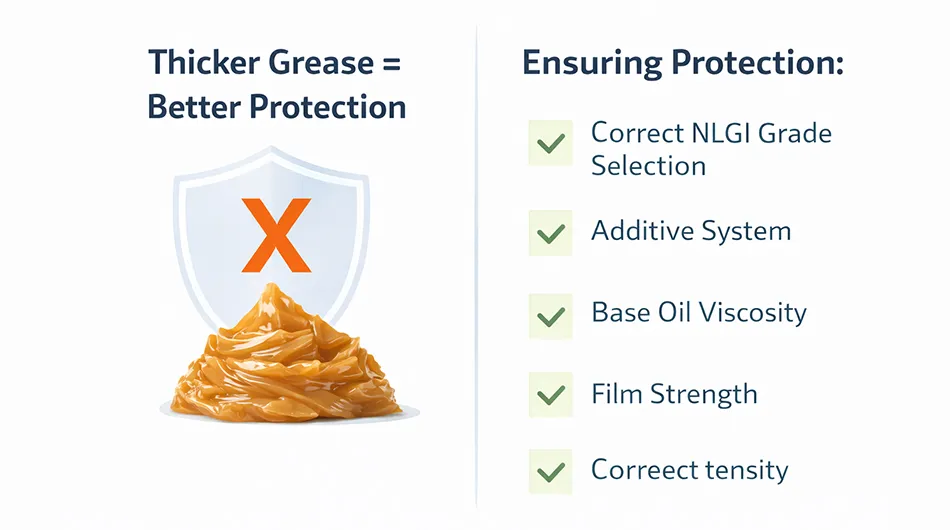
A common misconception is that thicker grease offers better protection. But in reality, protection depends on the following factors:
- Correct NLGI grade selection
- Additive system
- Base oil viscosity
- Film strength
An NLGI 3 grease in a system designed for NLGI 1 can cause starvation, while an NLGI 0 grease in an open bearing can lead to leakage and contamination.
Consistency must always match the mechanical design and operating conditions.
Calcium Sulfonate Grease for Private Label Applications
Calcium sulfonate greases are increasingly popular for private label grease programs especially in industries where water is resistance and EP performance are critical.
These greases can be supplied in:
- Multiple packaging formats (cartridges, pails, drums)
- NLGI 0, 1, 2, or 3
- Custom branding and labeling
Calcium Sulfonate grease type is also available for Private Label production under your own brand name that allows distributors and OEMs to offer premium-performance products without investing in manufacturing.
Final Thoughts
Understanding the NLGI grades for calcium sulfonate grease is essential for selecting the right product and achieving reliable equipment performance. While the formulation provides strength, corrosion protection, and EP capability, the NLGI grade determines how effectively that performance is delivered to the application.
In most cases:
- NLGI 2 is the industry standard
- NLGI 0–1 suit centralized and low-temperature systems
- NLGI 3 works best in high-temperature or vertical applications
Choosing the correct grade ensures longer equipment life, reduced maintenance costs, and consistent lubrication performance.
If you need guidance on selecting the right calcium sulfonate grease—or want to develop it under your own brand—working with an experienced grease manufacturer makes all the difference.