What Is Bentonite Grease? Advantages & Applications
When discussing high-temperature greases, many buyers use the term “moly grease” as a general reference for heavy-duty or specialty lubricants. In reality, one of the most commonly misunderstood products in this category is bentonite grease, also known as clay-based or non-melting grease.
It helps prevent costly lubrication mistakes, especially in high-temperature or industrial environments.
This guide will explain what is bentonite grease, how it works, where it performs best, and when it should not be used.
What Is Bentonite Grease?
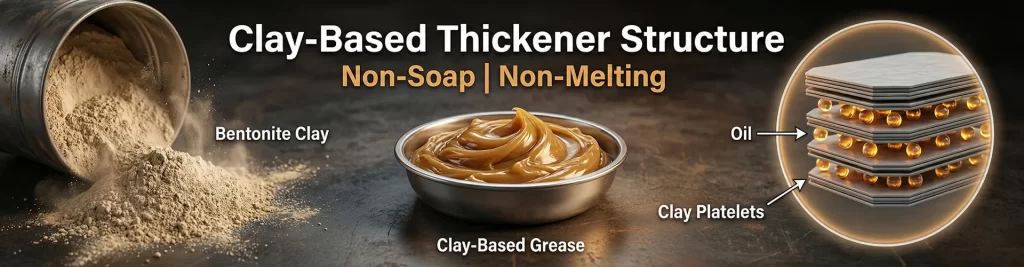
Bentonite grease is a clay-based grease that uses bentonite as its thickener instead of traditional soap systems such as lithium or calcium.
Because bentonite does not melt, this grease is often classified as a non-melting grease. Rather than having a defined drop point, bentonite grease maintains its structure even at very high temperatures, making it suitable for applications where conventional soap-thickened greases would fail.
This unique behavior is the key reason bentonite grease is selected for extreme heat environments.
Why Bentonite Grease Is Called “Non-Melting”?
Unlike lithium or calcium greases, bentonite grease:
- Does not liquefy when exposed to high heat
- Does not have a traditional drop point
- Retains consistency until base oil evaporation occurs
This makes bentonite grease ideal for equipment operating continuously at elevated temperatures, where grease breakdown would otherwise lead to lubrication loss.
However, “non-melting” does not mean “maintenance-free” and that distinction is critical.
Bentonite Grease vs Moly Grease – Clearing the Confusion
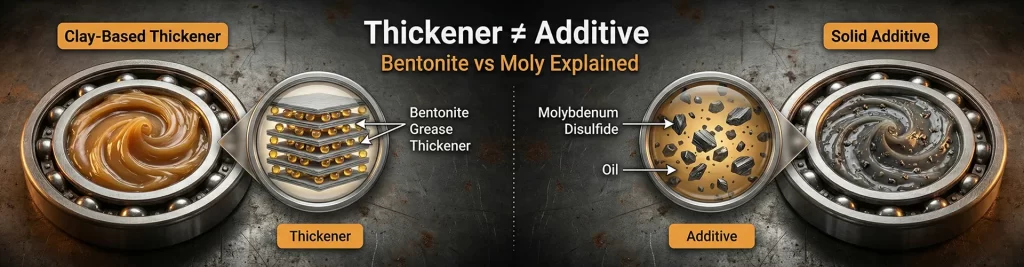
The term “moly grease” typically refers to grease containing molybdenum disulfide, a solid lubricant used for extreme pressure and shock loading.
Bentonite grease and moly grease are not the same thing:
- Bentonite refers to the thickener system
- Moly refers to a solid additive
Some bentonite greases may contain moly additives, but many do not. Confusing the two can lead to incorrect grease selection, especially in bearings or high-speed applications.
Key Properties of Bentonite (Clay-Based) Grease
Bentonite grease is chosen for very specific performance characteristics:
- Excellent high-temperature stability
- True non-melting behavior
- Strong resistance to thermal breakdown
- Good chemical stability in dry environments
- Works well in slow-speed, high-heat applications
Bentonite grease also has limitations that must be understood before use.
Bentonite Grease Uses in Industrial Applications
So, where does bentonite grease make sense?
1. High-Temperature Industrial Equipment
Bentonite grease is widely used in:
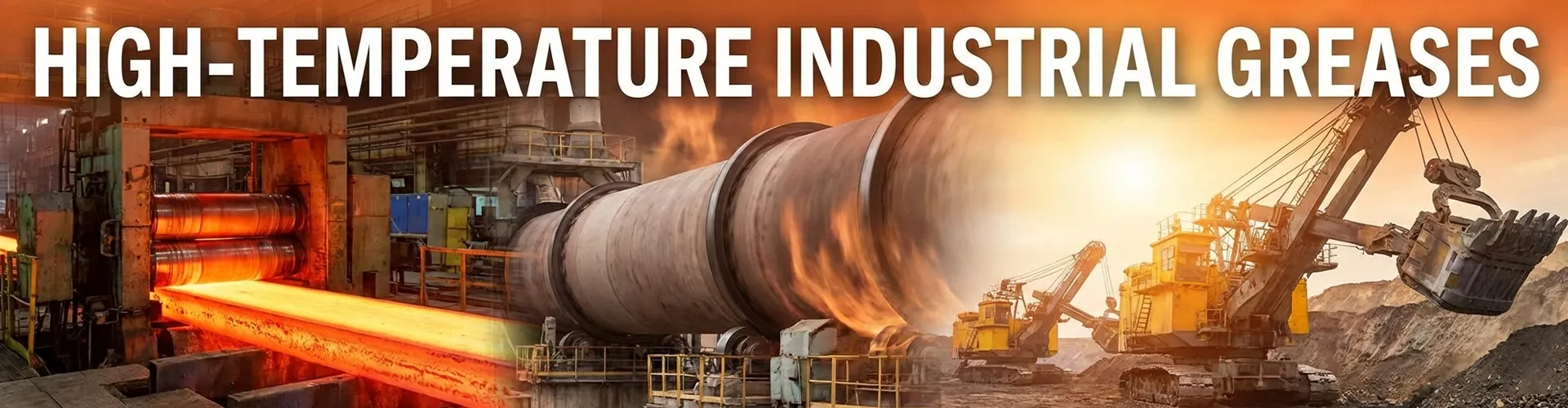
- Hot air fans and conveyors
- Kilns and furnaces
- Dryers and ovens
- Steel and cement plants
In these environments, heat resistance is more critical than water resistance or high-speed performance.
2. Slow-Speed Bearings Exposed to Heat
Because bentonite grease does not melt, it performs reliably in:
- Low-RPM bearings
- Bearings near heat sources
- Equipment with constant thermal exposure
This is one of the most common bentonite grease uses in heavy industry.
3. Dry, Non-Washdown Environments
Clay-based grease performs best where:
- Water exposure is minimal
- Steam or washdown is not frequent
- Humidity is controlled
This makes it suitable for certain processing plants and enclosed systems.
Where Bentonite Grease Should NOT Be Used
Despite its high-temperature advantages, bentonite grease is not universal.
Avoid bentonite grease in:
- High-speed bearings
- Applications requiring frequent relubrication
- Wet or washdown environments
- Systems where oil separation is critical
Unlike lithium complex or calcium sulfonate greases, bentonite grease does not reflow or self-heal under shear.
Bentonite Grease vs Lithium Complex Grease
A common comparison during grease selection is bentonite vs lithium complex:
| Feature | Bentonite Grease | Lithium Complex Grease |
| Drop point | Non-melting | High but defined |
| High-speed suitability | Limited | Good |
| Water resistance | Moderate | Very good |
| Relubrication behavior | Poor | Excellent |
| Application range | Narrow | Broad |
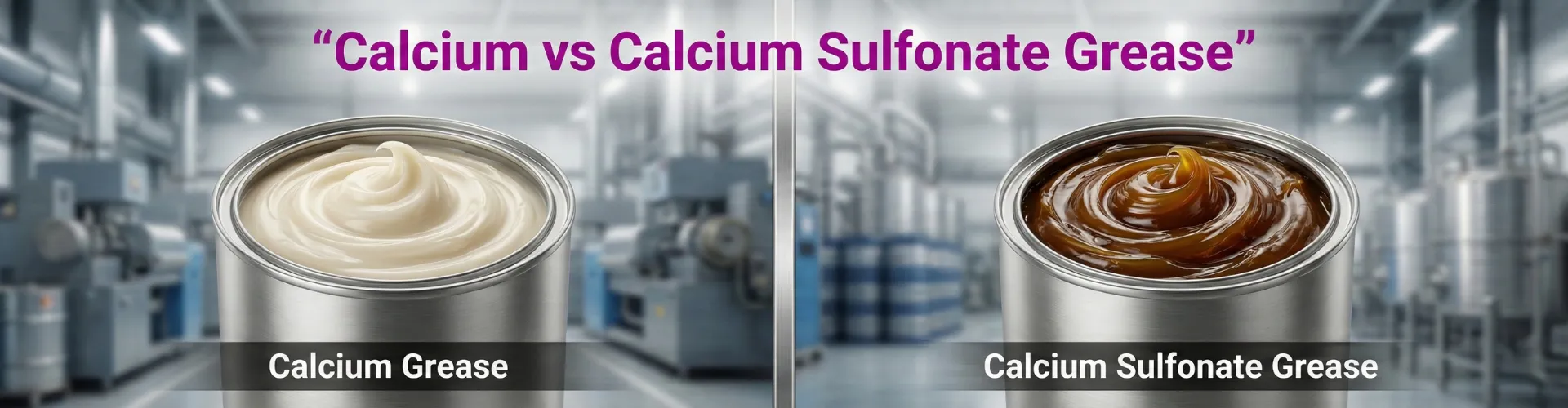
For many industrial users, Lithium Complex EP greases offer greater versatility unless extreme heat is the dominant concern.
Rexol High-Temperature Grease Solutions
Rexol offers a full portfolio of industrial greases designed for demanding conditions, including:
- Lithium Complex EP 220 & EP 460 for high-load, high-temperature bearings
- Polyurea Synthetic Grease for long-life electric motor and sealed bearing applications
- Specialized non-soap thickened greases for thermal stability requirements
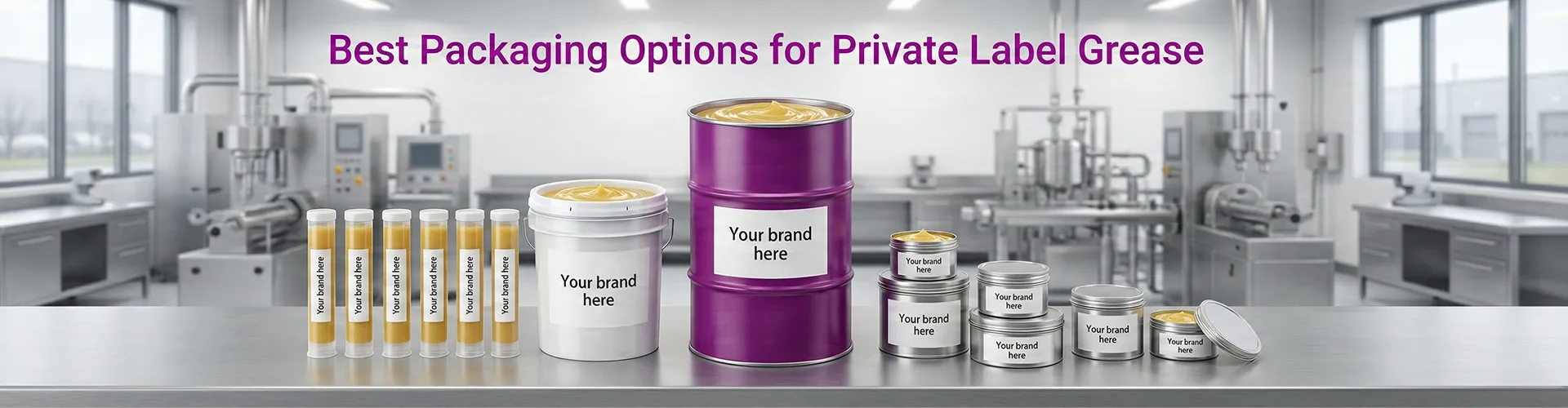
This grease type is also available for Private Label production under your own brand name.
Rexol’s technical team will help customers select the correct grease, not just the most heat-resistant one.
Private Label Bentonite Grease Manufacturing
Bentonite grease is often selected for niche industrial markets, making it an ideal candidate for private label programs.
Rexol supports private label grease projects with:
- Flexible MOQs based on project scope
- Export-ready packaging formats
- Technical documentation and data sheets
- Region-specific compliance support
If you are developing a specialized grease range, explore Rexol’s Private Label Grease Manufacturing solutions to bring your product to market efficiently.

Final Thoughts
Bentonite grease plays a valuable role in high-temperature, slow-speed industrial applications—but it is not a one-size-fits-all solution.
Understanding what bentonite grease is, where it excels, and where it falls short ensures reliable lubrication performance and longer equipment life.
For buyers unsure whether bentonite grease, lithium complex grease, or polyurea grease is the right choice, working with an experienced manufacturer like Rexol makes all the difference.
Choosing the right grease isn’t just about heat—it’s about application fit.