White Label vs Private Label Grease – Key Business Differences
Choosing the right branding model can significantly impact profitability, scalability, and long-term positioning for distributors, importers, and lubricant entrepreneurs.
One of the most common questions in the grease industry today is:
White label vs private label grease — what’s the difference, and which model is better for your business?
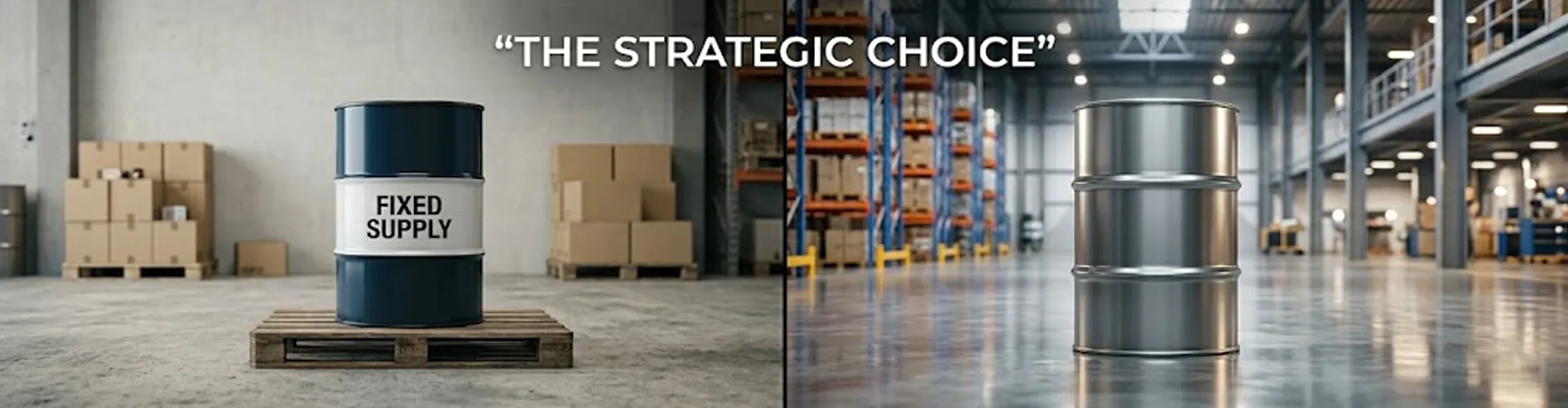
While the two terms are often used interchangeably, they represent distinct strategies with different levels of control, investment, and long-term brand value.
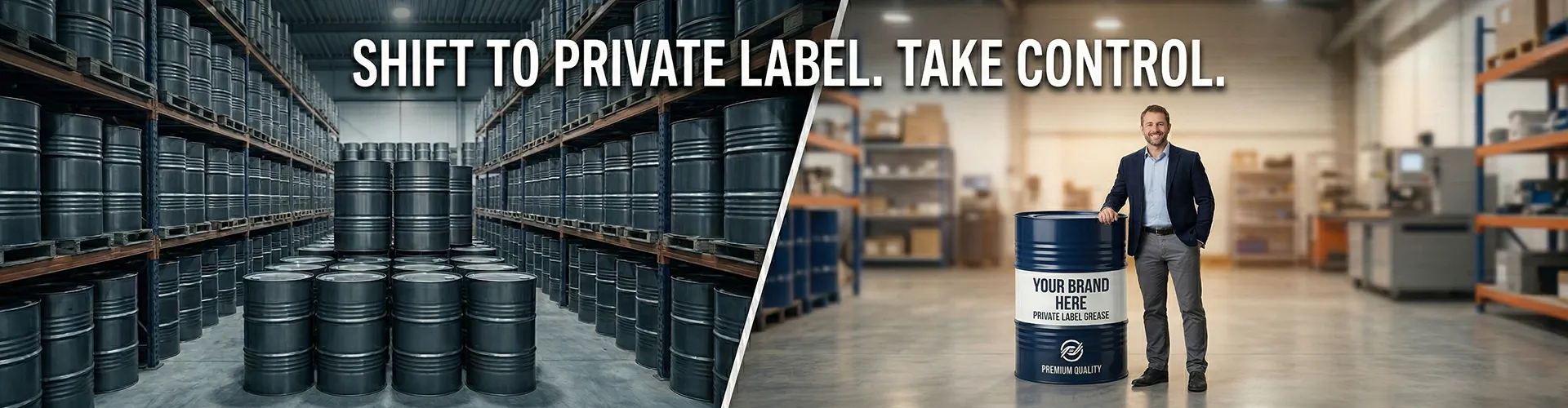
If you’re considering launching or expanding a grease line, understanding these differences is essential before committing to a manufacturing partnership. Learn more about how to start your own grease brand
Understanding the Basics
Let’s clarify what each model typically means in the lubricant industry, before comparing advantages.
What Is White Label Grease?
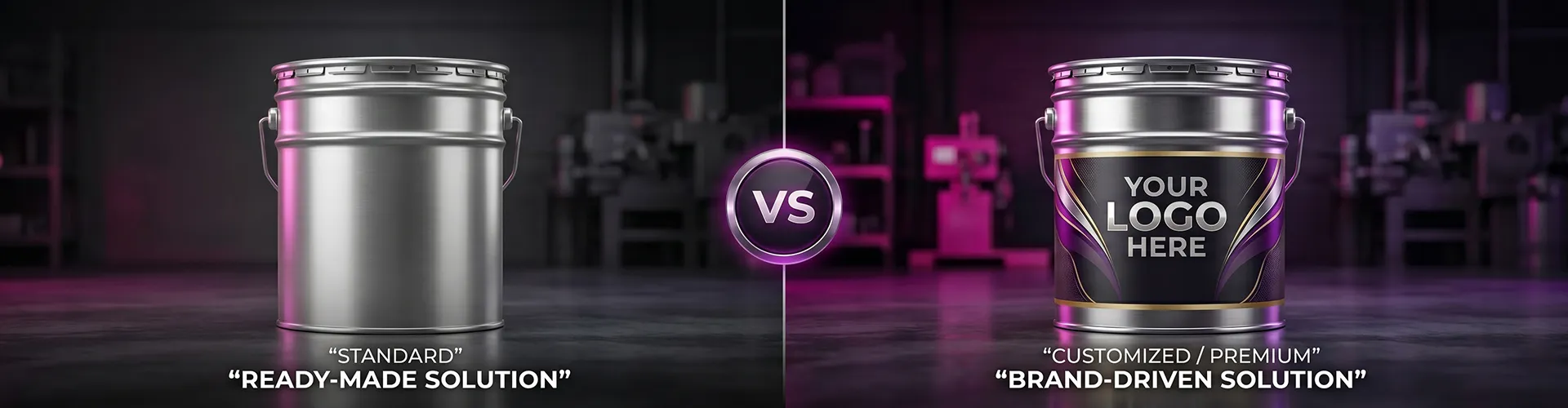
White label lubricants are preformulated, ready-made grease products manufactured by a supplier and sold under your brand name with minimal customization.
In this model:
- The formula is standard
- Specifications are predefined
- Packaging options are often fixed
- Label design changes, but the product remains the same
White label grease is designed for speed and simplicity. It will allow distributors to enter the market quickly without technical development work.
What Is Private Label Grease?
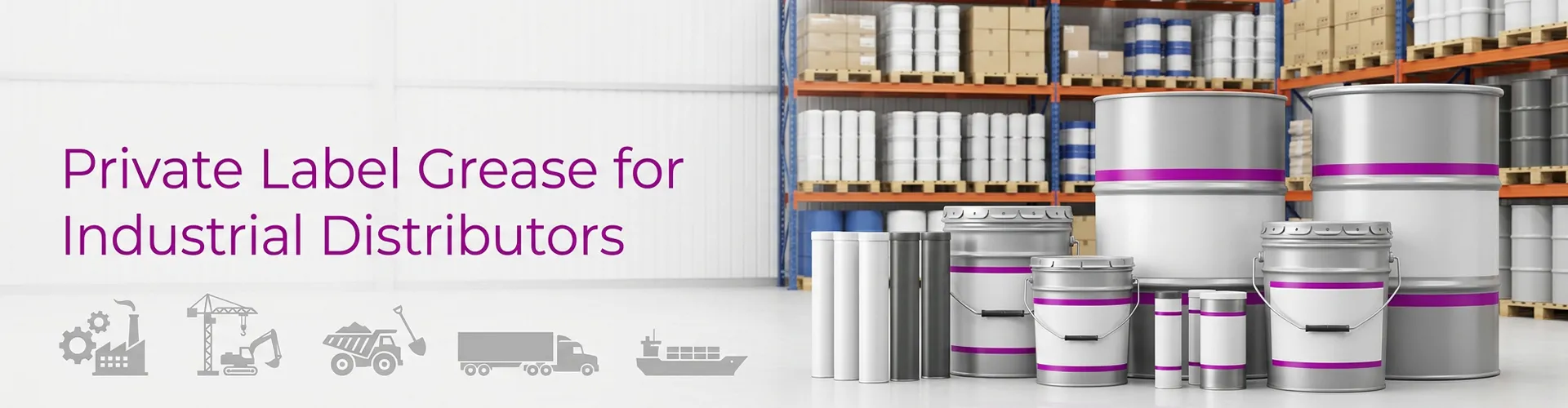
On the other hand, private label grease offers more flexibility and strategic control.
In this model:
- You will select grease types based on your market needs
- Formulations may be adjusted (depending on project scope)
- Packaging formats can be customized
- Branding and positioning are tailored to your business
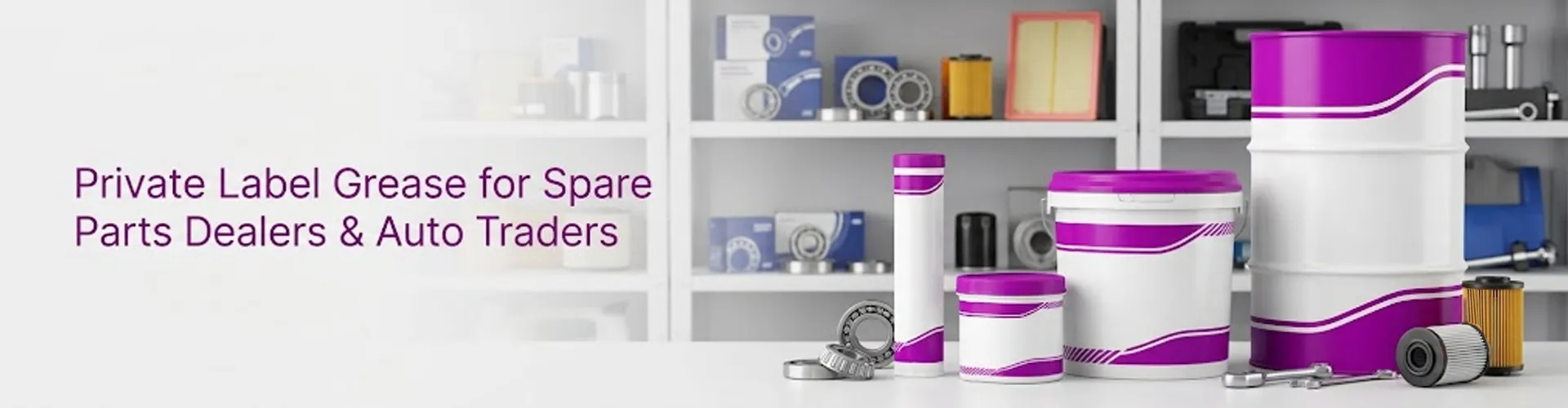
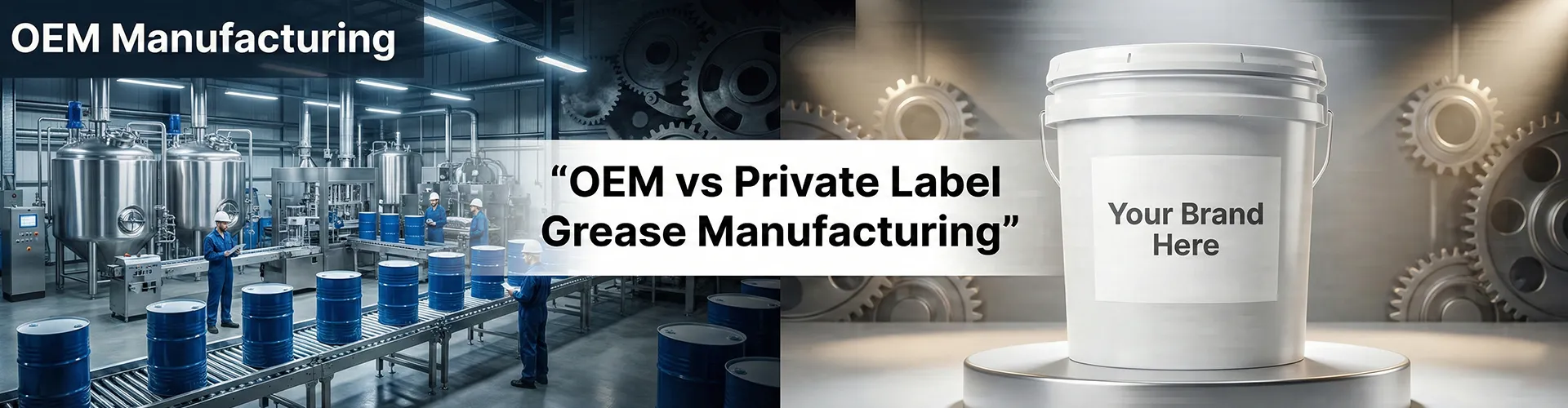
Private label grease is used by distributors who want to build long-term brand equity rather than simply resell a standardized product. Find out more about OEM vs private label grease manufacturing.
You can explore how the process works in detail on our Private Label Grease page.
Core Differences: White Label vs Private Label Grease
Let’s break the comparison down into key business categories.
1️⃣ Speed to Market
White Label Grease:
- Faster launch
- Pre-approved formulas
- Minimal technical decision-making
- Suitable for quick market entry
Private Label Grease:
- Requires product selection discussions
- May involve packaging customization
- Slightly longer preparation phase
If your priority is immediate entry with minimal setup, white label lubricants offer simplicity. If your priority is strategic positioning, private label grease offers more depth. Explore our latest update about how long private label grease production takes.
2️⃣ Level of Customization
This is where the real difference appears.
White Label:
- Standard grease formulas
- Limited customization
- Designed for generic multi-market use
Private Label:
- Product mix tailored to your target segments
- Choice between lithium, lithium complex, polyurea, calcium sulfonate, moly, etc.
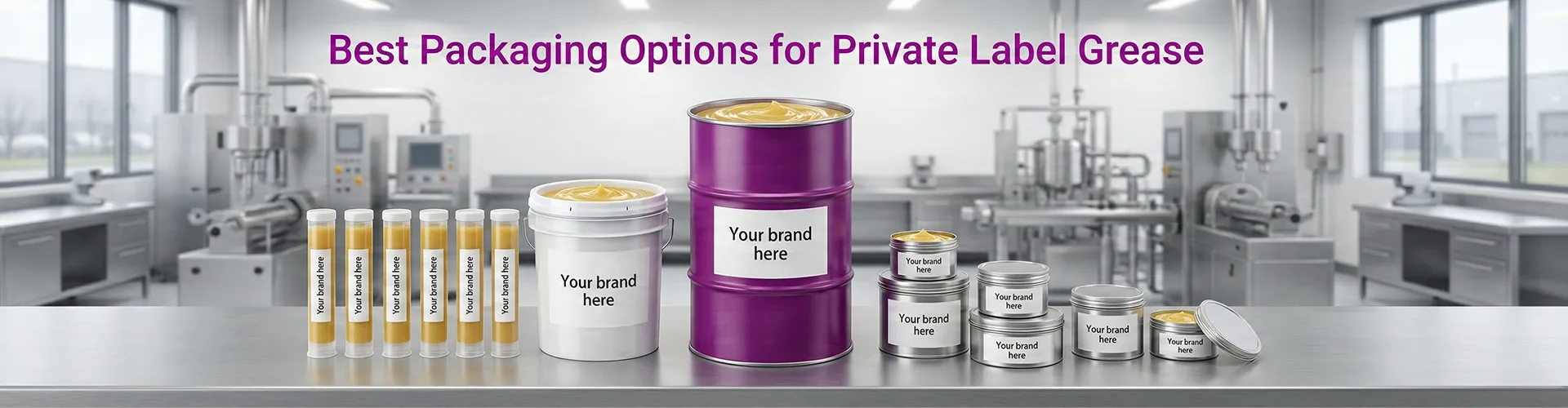
- Packaging selection aligned with your market (cartridges, pails, drums)
- Branding aligned with your pricing strategy
Customization often becomes important for competitive positioning for distributors serving fleets, construction companies, or industrial clients. Find out more about best packaging options for private label grease brands.
3️⃣ Brand Ownership & Market Identity
In both models, the product carries your brand name. However, the strategic impact will differ.
With white label lubricants, the product is essentially a standardized offering under your label. Competing distributors may sell similar products with minor branding differences.
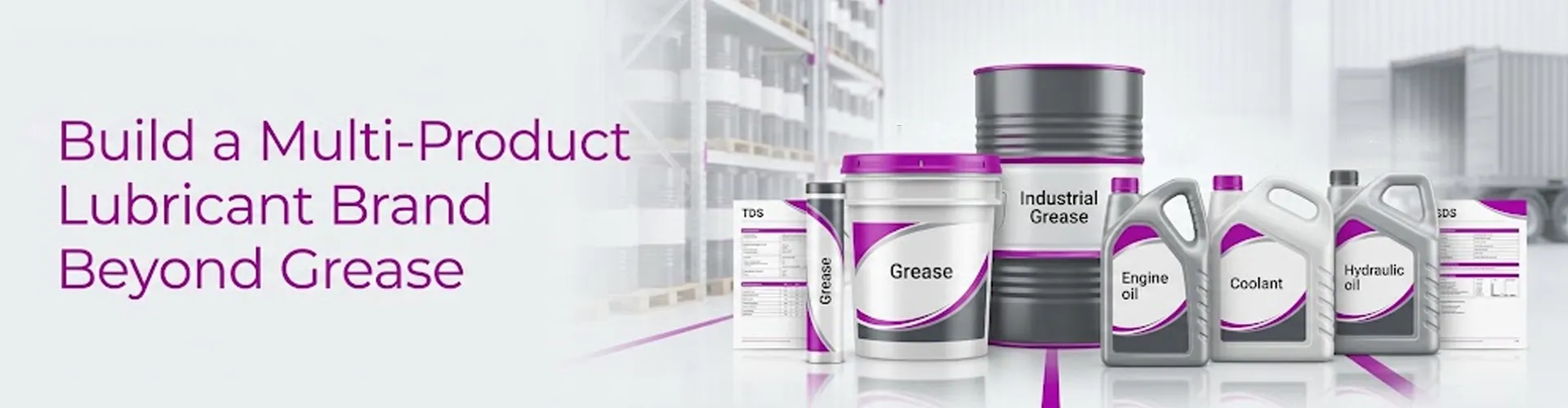
Your product portfolio can be structured around your specific market with private label grease:
- Entry-level multipurpose grease
- Heavy-duty EP 220 / EP 460
- High-temperature lithium complex
- Specialized moly or calcium sulfonate grades
This structured lineup strengthens your grease branding and builds stronger market differentiation. Read our latest update about why distributors choose private label instead of big brands.
4️⃣ Margin Control & Profitability
Both models can be viable, but margin flexibility varies. From a profitability perspective:
White label grease typically:
- Offers stable but standardized margins
- Has limited pricing differentiation
- Competes more on availability
Private label grease:
- Provides stronger pricing control
- Allows positioning at different market levels
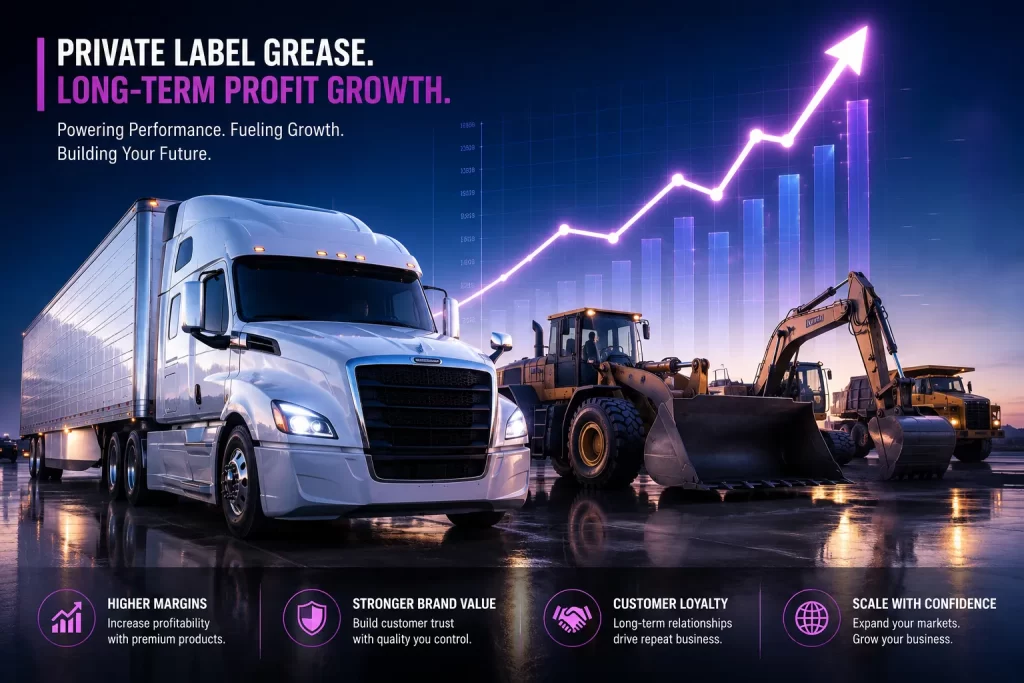
- Supports long-term private label lubricant profit growth
Margin flexibility becomes a strategic advantage for distributors focused on scaling their grease distribution business. Explore our latest update about private label grease vs branded grease.
5️⃣ Technical Development & OEM Opportunities
If your goals include:
- Supplying industrial contracts
- Participating in tenders
- Supporting OEM partnerships
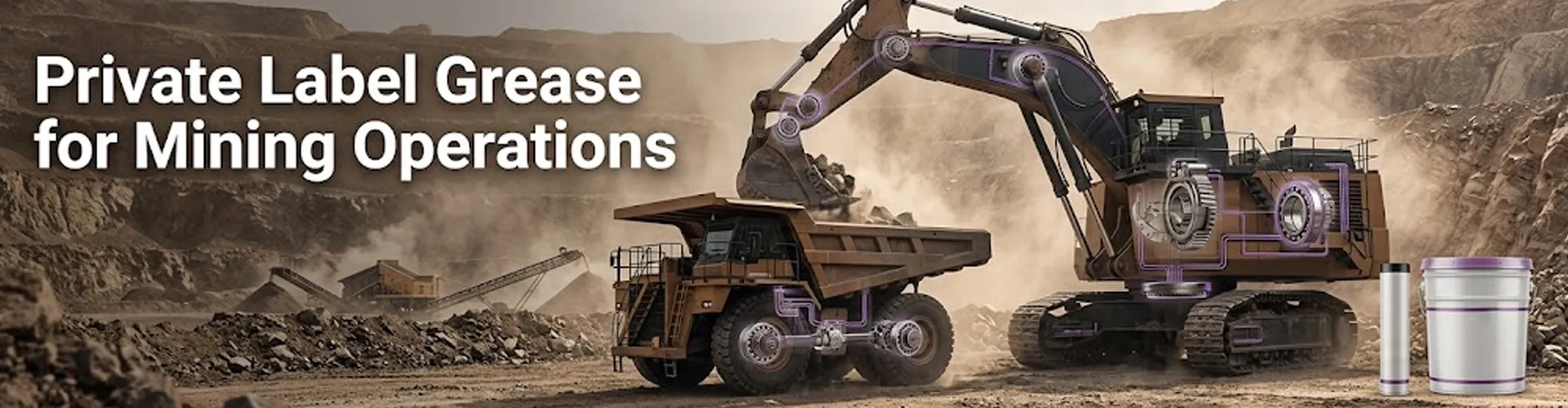
- Serving mining or heavy construction sectors
Private label grease offers more room for structured technical alignment. Explore our latest update about importing private label grease under your own brand.
White label lubricants are better suited for general retail and workshop markets where technical customization is not required.
When White Label Grease Makes Sense
White label grease is ideal when:
- You want to test the lubricant market quickly
- You are adding grease as a complementary product line
- Your customers prioritize price and availability
- You want minimal involvement in formulation decisions
It is particularly suitable for new distributors exploring grease for the first time.
When Private Label Grease Is the Better Choice
Private label grease is better suited when:
- You want long-term brand growth
- You serve fleets or construction sectors
- You aim to build repeat business under your own identity
- You want flexibility in packaging and product range
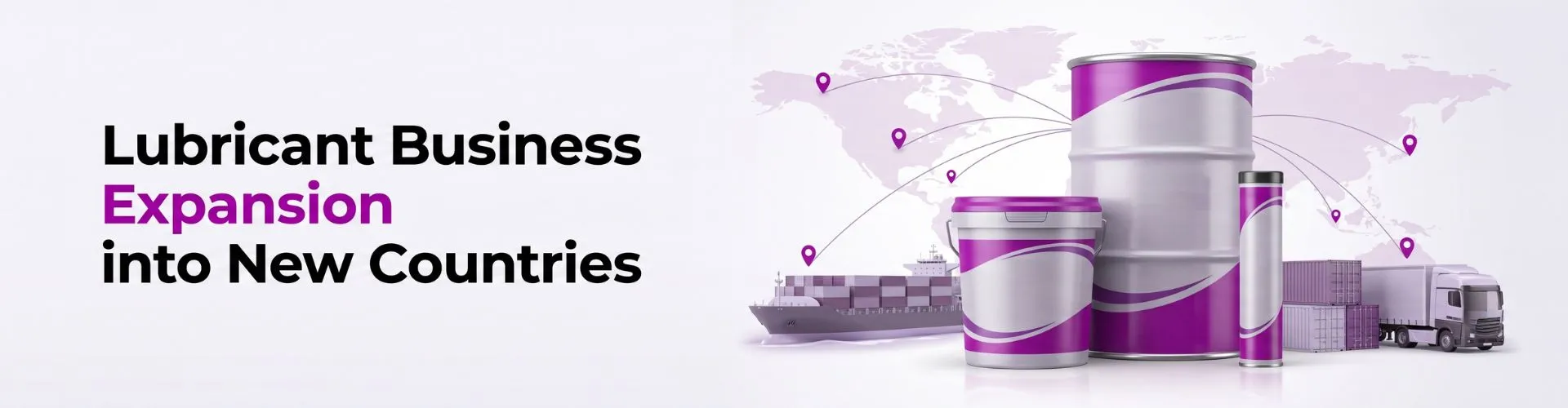
- You are planning regional expansion
Distributors often start with white label and transition into private label once market traction increases in growing markets across Africa, Asia, and the CIS region.
Hybrid Strategy: Combining Both Models
Many successful distributors will use a hybrid approach:
- Launch white label lubricants for fast entry.
- Introduce private label grease in high-volume segments.
- Gradually expand the private label portfolio.
- Improve blended margins across product lines.
This phased strategy will reduce risk while building long-term brand strength.
Choosing the Right Manufacturing Partner
Regardless of the model, the manufacturer must provide:
- Consistent quality control
- Technical documentation (TDS, MSDS)
- Export-ready packaging
- Flexible MOQ structure
- Reliable lead times
The difference between white label and private label grease lies less in production quality and more in strategic positioning. Read our latest blog about choosing a private label grease supplier, and MOQ for private label grease.
Key Decision Questions to Ask Yourself
Before choosing between white label vs private label grease, consider:
- Do I want speed or strategic control?
- Is my market highly competitive on price?
- Am I building a short-term trading line or a long-term brand?
- Will I target fleets and industrial clients?
- Do I want to differentiate my grease branding?
Your answers will guide the correct model. Find out more about build a grease brand without a factory.
Final Thoughts
The debate between white label vs private label grease is not about which is better universally it’s about which aligns with your business objectives.
White label lubricants will provide simplicity and speed.
Private label grease provides control, scalability, and stronger brand equity.
Private label often becomes the long-term strategic choice for distributors planning serious growth in fleet, construction, or industrial sectors.
Ready to Explore Your Options?
If you are evaluating which model fits your business:
👉 Explore our Private Label Grease manufacturing program to build a structured, scalable grease brand under your own name.
Rexol supports both approaches, helping distributors move from market entry to long-term brand ownership with confidence.
Let’s build the right strategy for your grease business.