Grease Dropping Point Explained & Why It Matters
When selecting grease for industrial machinery, trucks, bearings, or high-temperature applications, one technical term often appears on the product data sheet: grease dropping point.
Many buyers assume dropping point means the exact temperature where grease “melts” and fails. That is not fully correct. The dropping point is useful, but it should not be treated as the actual working temperature limit of grease.
In this guide, we explain what the dropping point of grease means, why it matters, how it differs from operating temperature, and how it helps maintenance teams, industrial buyers, and distributors choose the right grease for demanding applications.
What Is Grease Dropping Point?
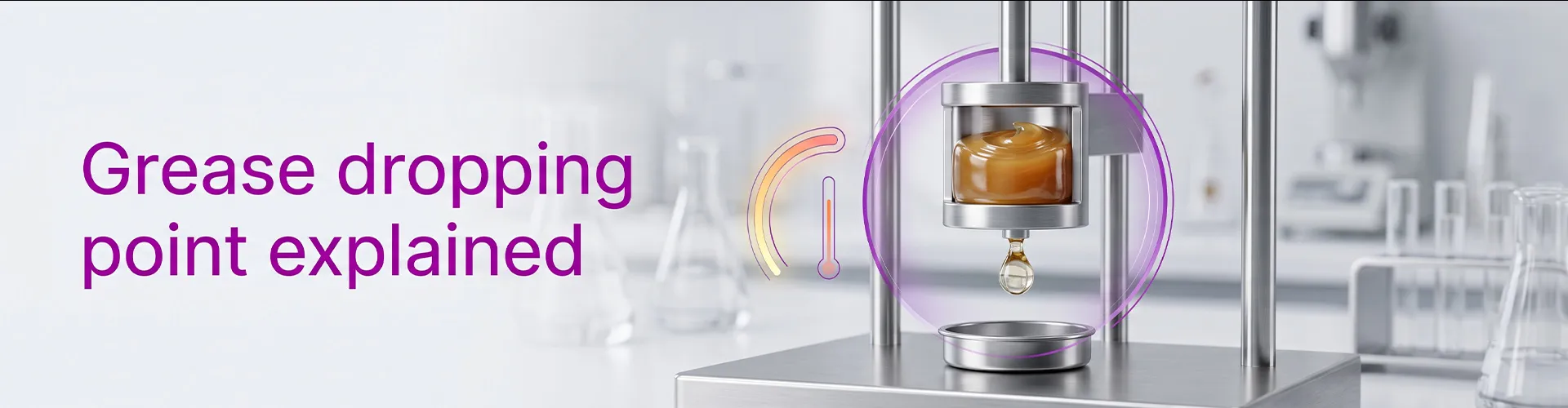
Grease dropping point is the temperature at which the grease becomes soft enough to release a drop under standard test conditions
In simple terms, it indicates the temperature where the grease starts to break down significantly.
Grease is made from three main parts:
- Base oil
- Thickener system
- Performance additives
The thickener holds the oil in place like a sponge. When the temperature rises, the thickener structure can weaken. The dropping point helps indicate the thermal stability of that thickener system, but it is not the same as the actual working temperature limit of the grease.

Is Grease Dropping Point the Same as Grease Melting Point?
Not exactly.
“Dropping point” refers to the temperature at which grease becomes soft enough to release a drop under standard test conditions. Many people call this the grease melting point, but that term is not fully accurate because grease does not melt like ice, wax, or metal. Grease is a semi-solid lubricant, so its behavior depends on the thickener, base oil, additives, and operating conditions. The operating temperature limit is different from the dropping point because it shows the practical temperature range where the grease can actually perform in real equipment. Similarly, the high-temp grease limit should always be checked from the product’s technical data sheet because it depends on the complete grease formulation and application conditions.
So, if a grease has a dropping point of 260°C, it does not mean the grease can safely operate at 260°C continuously.
Why Does Grease Dropping Point Matter?
Dropping point matters because it indicates how well the thickener system behaves at high temperatures.
It helps customers understand whether a grease is suitable for the applications like:
- Industrial machinery
- Construction equipment
- High-temperature bearings
- Electric motors
- Wheel bearings
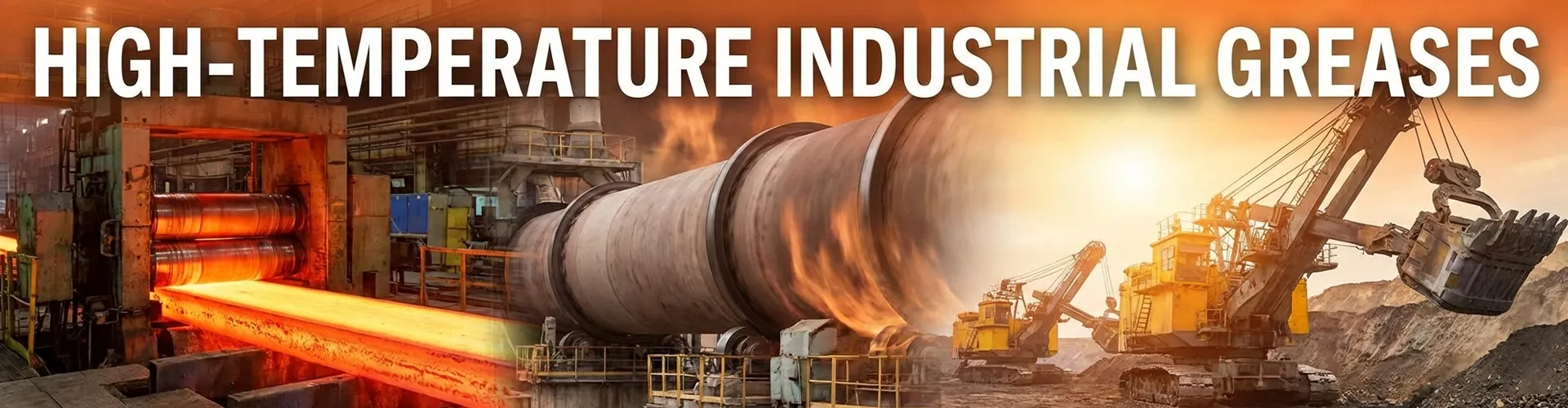
- Steel plants
- Heavy-duty fleet operations
Greases having a higher dropping point stay stable and firm even at high temperatures. But selecting grease should not only depend on the dropping point. There are many other factors involved, like load, speed, water resistance, base oil, thickener type, and the actual operating temperature range.
What Happens If Grease Exceeds Its Temperature Limit?
Several problems arise when grease is exposed to temperatures beyond its practical limit:
- Grease may soften and leak out
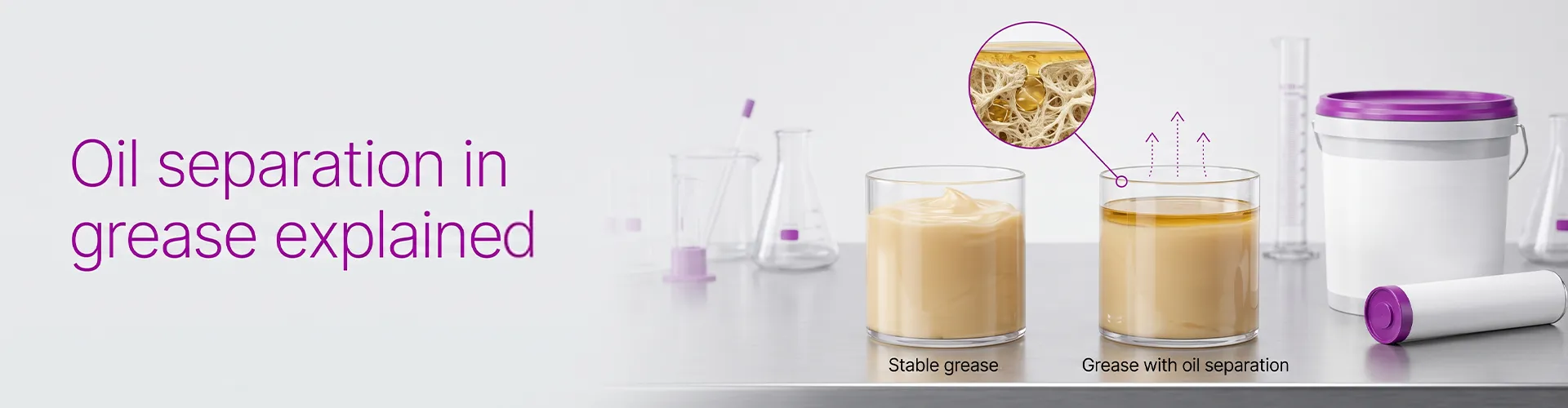
- Oil may separate from the thickener
- Bearings may run dry
- Oxidation may increase
- Components may overheat
- Wear and friction may increase
- Equipment downtime may occur
This is why checking the dropping point and recommended operating temperature range is very important
How Is Dropping Point Different from Operating Temperature?
This is one of the most important points to understand.
The dropping point of grease is a laboratory value. The operating temperature range is the practical temperature range where the grease is expected to perform in actual equipment.
Dropping Point vs Operating Temperature
Dropping point tells you when the grease structure begins to fail in a test, while operating temperature tells you where the grease can actually work in real equipment.
| Factor | Dropping Point | Operating Temperature |
| What it shows | Thickener softening under test conditions | Practical working temperature range |
| Where it appears | Technical data sheet | Technical data sheet or product guidance |
| Can it be used as a max working temperature? | No | Yes, with application review |
| Depends on | Thickener structure | Base oil, thickener, additives, speed, load and environment |
| Best use | Comparing thermal stability | Selecting grease for real equipment |
A grease should normally be used well below its dropping point. Always follow the product technical data sheet and equipment requirements.

Which Grease Types Usually Have Higher Dropping Points?
Different thickener systems offer different temperature performance.
General Grease Type Comparison
| Grease Type | Typical Temperature Positioning | Common Applications |
| Lithium grease | General-purpose temperature range | Automotive, workshop and general machinery |
| Lithium complex grease | Higher temperature than standard lithium grease | Heavy-duty bearings, fleets, construction equipment |
| Calcium sulfonate grease | High thermal stability with water resistance | Marine, mining, wet and heavy-duty applications |
| Polyurea grease | Long-life and oxidation stability | Electric motors and sealed bearings |
| High-temperature grease | Designed for elevated-temperature service | Industrial plants, ovens, steel and machinery applications |
Does a Higher Dropping Point Always Mean Better Grease?
The simple answer is NO. Having a higher dropping point does not always mean that the grease is suitable for every application.
For example, a high drop may help in hot conditions, but:
- The grease must also match the speed, load, and bearing design.
- Water resistance may matter more in wet environments.
- EP protection may matter more in heavy-load applications.
- Low-noise and oxidation stability may matter more in electric motors.
Grease selection should be done based on the overall performance and not just one parameter.
How Should You Choose Grease for High-Temperature Applications?
When checking the high temp grease limit, do not look only at the dropping point.
Review these factors:
- Recommended operating temperature range
- Dropping point
- Base oil type and viscosity
- Thickener type
- Oxidation stability
- Mechanical stability
- Load-carrying requirement
- Water or contamination exposure
- Equipment speed and bearing type
- Product technical data sheet
For heavy-duty applications, Lithium Complex EP grease may be suitable where higher temperature and load protection are required. For wet and harsh conditions, Calcium sulfonate grease may offer both thermal stability and strong water resistance. For electric motors, Polyurea grease may be considered where long service life and oxidation resistance are important.
Where Is the Dropping Point Most Important?
The dropping point is especially useful when selecting grease for applications exposed to heat or temperature variations.
Common examples include:
- Wheel bearings
- Electric motor bearings
- Industrial bearings
- Construction machinery
- Mining equipment
- Steel and cement plants
- Heavy-duty fleet components
- High-temperature industrial machinery
However, even in these applications, the final selection should be based on full product suitability.
How Rexol Supports Grease Selection and Private Label Manufacturing
Rexol is a private label grease manufacturer supporting distributors and lubricant brands with grease solutions for automotive, fleet, construction, mining, marine, and industrial markets.
Distributors can develop a structured product range using Rexol grease categories such as Lithium EP grease, Lithium complex grease, Calcium sulfonate grease, Moly grease, Polyurea grease and high-temperature grease.
For businesses building their own lubricant brand, Rexol’s private label grease support can help with product selection, packaging options, technical documentation, and export-ready supply.

Final Thoughts
A grease dropping point is an important technical value, but it should not be used alone to select grease. It tells you about thickener stability under test conditions, not the exact working temperature limit of the grease.
Always compare dropping point with other factors like load conditions, operating temperature, speed, environment, and product documentation.
By understanding what “dropping point” really means, maintenance teams and distributors can choose grease more confidently for high-temperature and demanding applications.