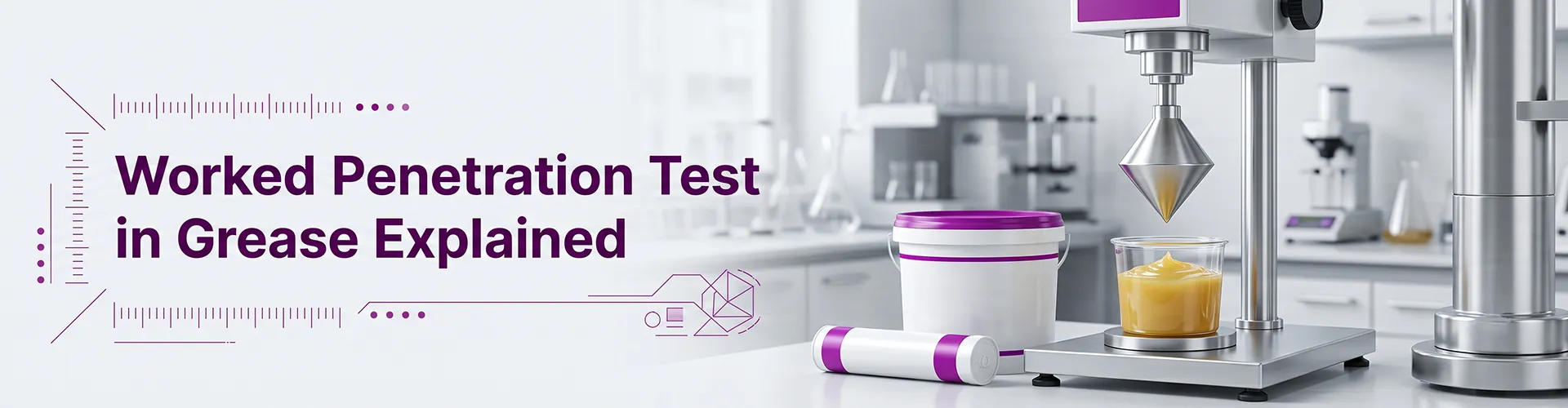
Worked Penetration Test in Grease Explained
When selecting industrial grease, many buyers pay close attention to properties such as NLGI grade, base oil viscosity, or thickener type. However, one of the most important quality measurements behind these specifications is the worked penetration grease test.
This test will help manufacturers and engineers determine a grease’s consistency after it has been mechanically worked, closely simulating what happens during actual service. The results are used to classify grease according to the NLGI grading system and ensure consistent product performance across different applications.
In this guide, we’ll explain what the worked penetration test is, how it is performed, why it matters the most, and how it influences grease selection for industrial equipment.
What Is Worked Penetration in Grease?
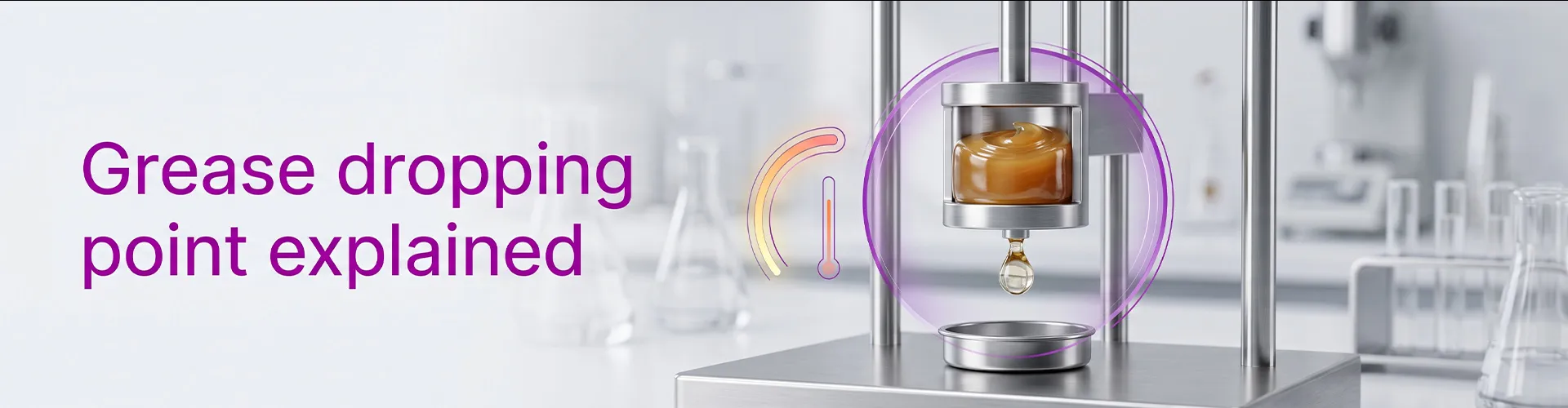
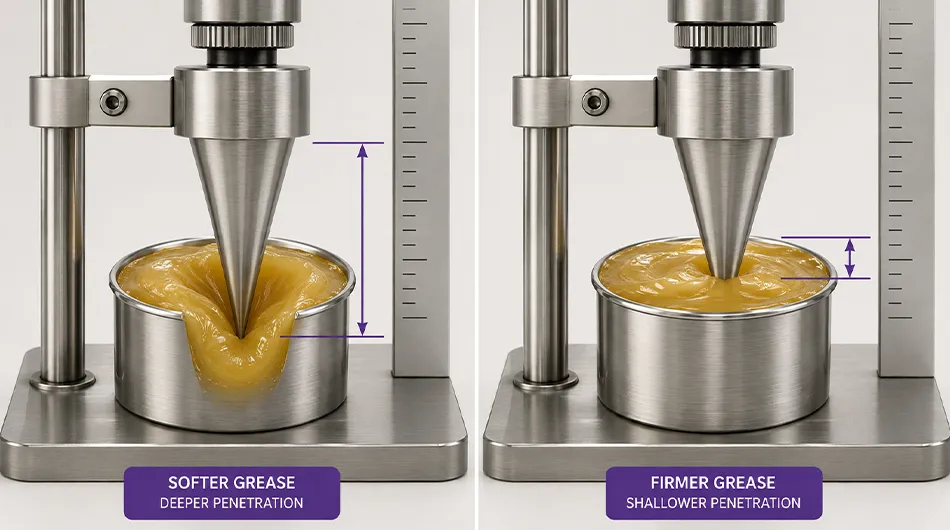
Worked penetration is a laboratory measurement used to determine the consistency of grease after it has been subjected to repeated mechanical working.
Grease behaves as a semi-solid material, unlike liquid lubricants. Bearings and moving components continuously knead and shear the grease during operation. The worked penetration test simulates this mechanical action to evaluate how the grease will perform in real operating conditions.
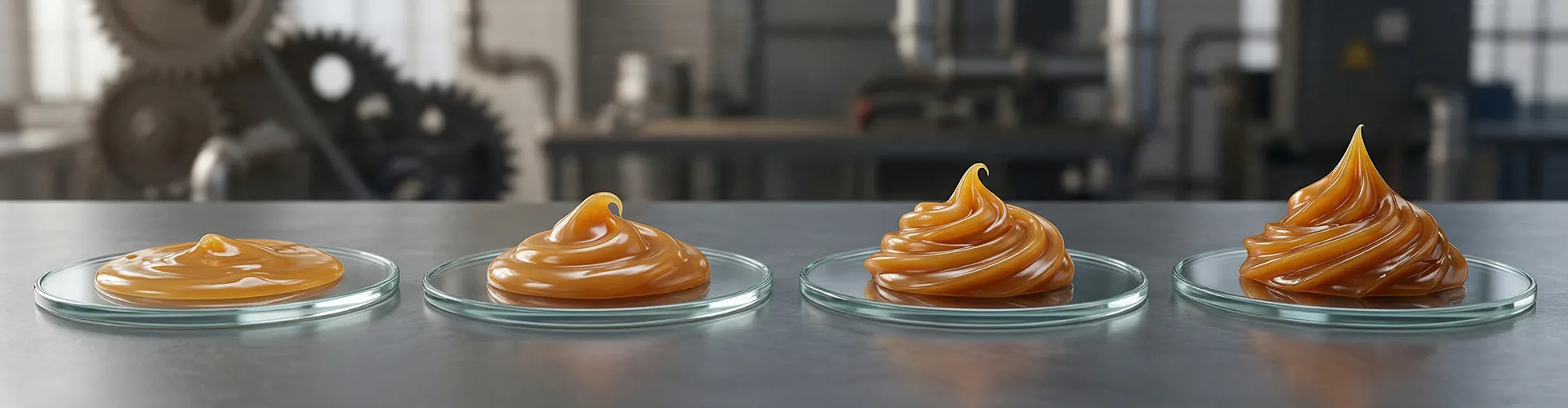
The firmer the grease, the lower the penetration value. Higher penetration values will indicate a softer grease.
Worked penetration grease testing is a critical part of grease quality control because consistency affects lubricant retention, pumpability, and equipment protection.
Why Is the Worked Penetration Test Important?
A grease must appear to have the correct consistency when freshly manufactured, but its behavior can change after being mechanically worked.
The test will help to determine whether the grease can maintain its consistency during service.
This information is valuable because it must influence the following:
- Lubrication performance
- Bearing protection
- Pumpability
- Mechanical stability
- Equipment reliability
Greases that remain stable after repeated working will generally provide more consistent lubrication over their service life.
How Is the Grease Consistency Test Performed?
The grease consistency test is following internationally recognized procedures, commonly based on ASTM D217.
The process
- A grease sample is placed into a standardized test cup.
- The sample is mechanically worked using a grease worker for 60 double strokes.
- After working, a calibrated cone is allowed to penetrate the grease under controlled conditions.
- The penetration depth is measured in tenths of a millimeter (dmm).
The resulting value is known as the worked penetration.
This standardized method will ensure that grease products can be compared consistently across different manufacturers.
Understanding the NLGI Testing Method
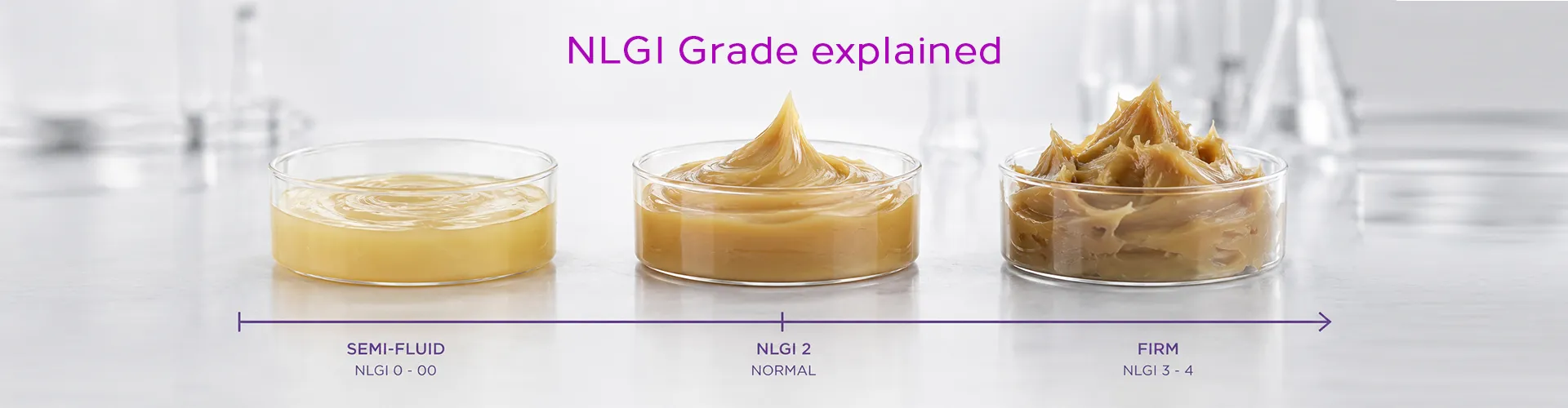
The NLGI testing method uses worked penetration values to classify grease into different consistency grades.
Some common NLGI grades are:
| NLGI Grade | Worked Penetration (dmm) | Typical Consistency |
| 000 | 445–475 | Semi-fluid |
| 00 | 400–430 | Very soft |
| 0 | 355–385 | Soft |
| 1 | 310–340 | Medium-soft |
| 2 | 265–295 | Multipurpose |
| 3 | 220–250 | Firm |
| 4–6 | Below 220 | Very firm |
NLGI Grade 2 is the most commonly used for automotive and industrial applications among these because it provides an excellent balance between pumpability and component retention.
Worked Penetration vs NLGI Grade
Worked penetration and NLGI grade are not exactly the same, although closely related.
- Worked penetration is the actual laboratory measurement.
- NLGI grade is the classification assigned based on that measurement.
For example:
A grease with a worked penetration of 280 dmm will fall within the NLGI Grade 2 range.
This standardized grading will allow maintenance teams to select the correct grease consistency recommended by equipment manufacturers.
Why Consistency Matters
Grease consistency will directly affect how the lubricant performs inside machinery.
If Grease Is Too Soft
Very soft grease may
- Leak from bearings
- Provide reduced sealing capability
- Require more frequent relubrication
If Grease Is Too Firm
Grease that is too firm may
- Resist pumping through centralized lubrication systems
- Increase operating temperatures
- Prevent proper lubricant distribution
Selecting the correct consistency will help to maximize bearing life and equipment reliability.
Factors That Can Affect Worked Penetration
Several variables influence the worked penetration value of a grease.
Thickener Type
Different thickener technologies will produce different consistency characteristics.
Examples include:
- Lithium grease
- Lithium complex grease
- Calcium sulfonate grease
- Polyurea grease
Base Oil Viscosity
Although base oil viscosity and consistency are different properties, both influence overall grease performance.
Mechanical Stability
Premium greases maintain their consistency even after prolonged mechanical working.
Greases with poor stability may soften or harden excessively during service, reducing lubrication effectiveness.

Choosing the Right Grease for Your Application
When you are selecting the industrial grease, worked penetration must be evaluated alongside other performance characteristics, which are
- NLGI grade
- Base oil viscosity (ISO VG)
- Operating temperature
- Load conditions
- Water resistance
- Oxidation stability
All these factors will help you to ensure optimal lubrication and longer equipment life.
Rexol Greases Are Engineered for Consistent Performance
Rexol manufactures high-performance grease designed to maintain consistent mechanical stability and dependable lubrication under demanding operating conditions.
Our product portfolio include:
- Lithium EP Greases
- Lithium Complex EP 220
- Lithium Complex EP 460
- Calcium Sulfonate Greases
- Polyurea Greases
- Molybdenum Greases
Each formulation is developed to provide reliable consistency, excellent wear protection, and long service life across a wide range of industrial applications. Rexol provides a complete private label grease solution specially designed for your market.
Learn More in Our Technical Hub
Understanding concepts such as worked penetration grease, the grease consistency test, and the NLGI testing method will enable maintenance professionals to make more informed lubrication decisions.
Explore our Technical Hub for additional resources that cover:
- NLGI grease grades
- Base oil viscosity (ISO VG)
- Grease compatibility
- Oxidation stability
- Thickener technologies
- Extreme-pressure lubrication
The right technical knowledge will help you select the right grease, improve equipment reliability, and reduce long-term maintenance costs.