Grease Leakage from Bearings: Causes, Diagnosis & Prevention
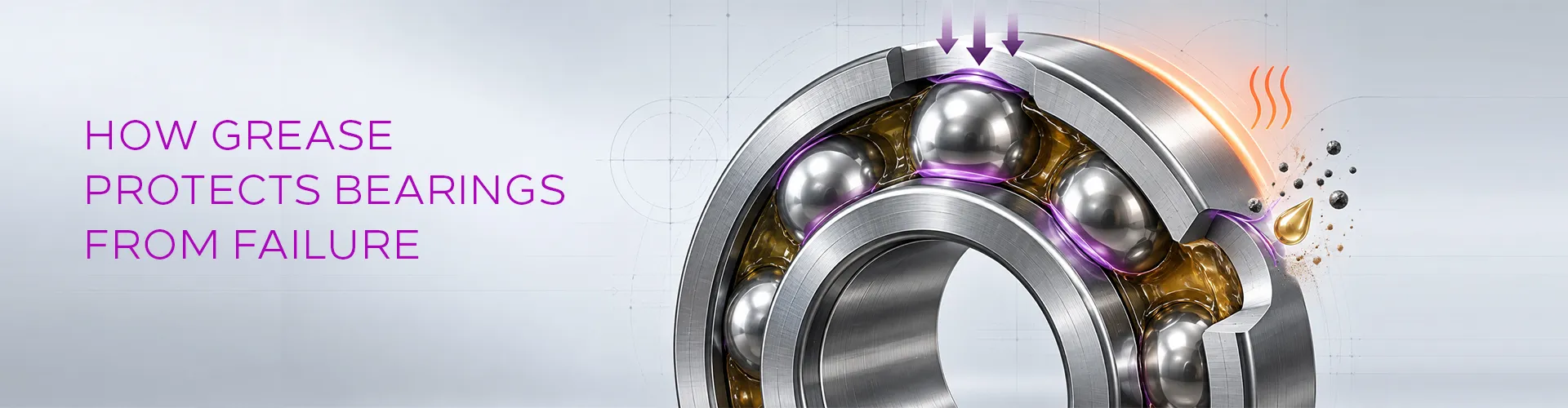
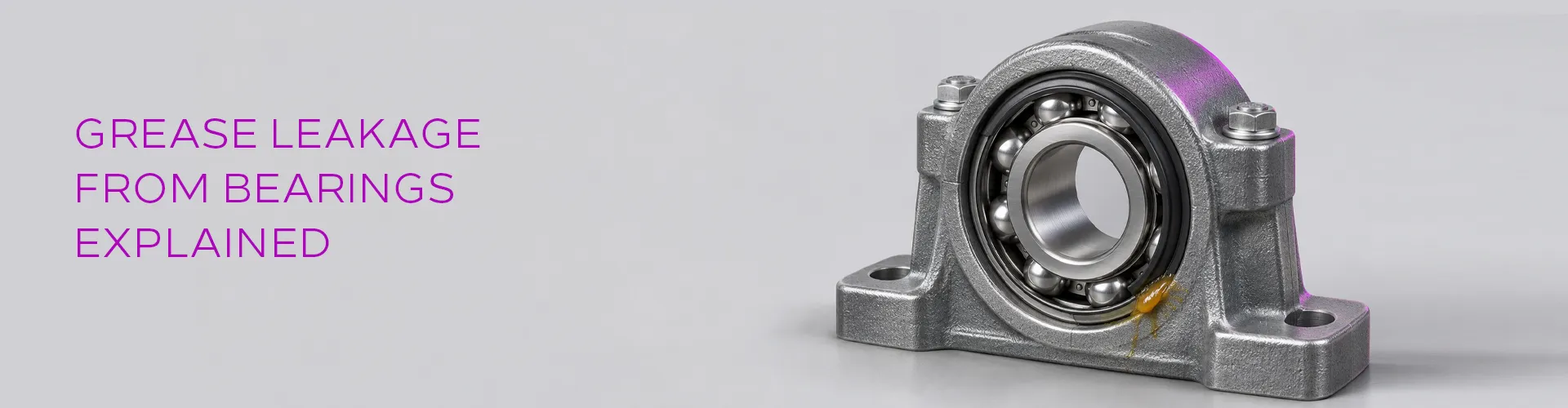
Grease is essential for protecting bearings against friction, wear, heat, and contamination. However, when grease escapes from a bearing housing or seal, it can indicate a lubrication problem that should not be ignored.
Grease leakage from bearings can occur for several reasons, including excessive lubrication, incorrect grease selection, damaged seals, high operating temperatures, or incompatible grease. In some applications, a small amount of grease migration may be normal, but significant leakage can reduce lubrication effectiveness and create maintenance problems.
Understanding the causes of a bearing grease leak helps maintenance teams identify the underlying issue and select the right corrective action.
What Causes Grease Leakage from Bearings?
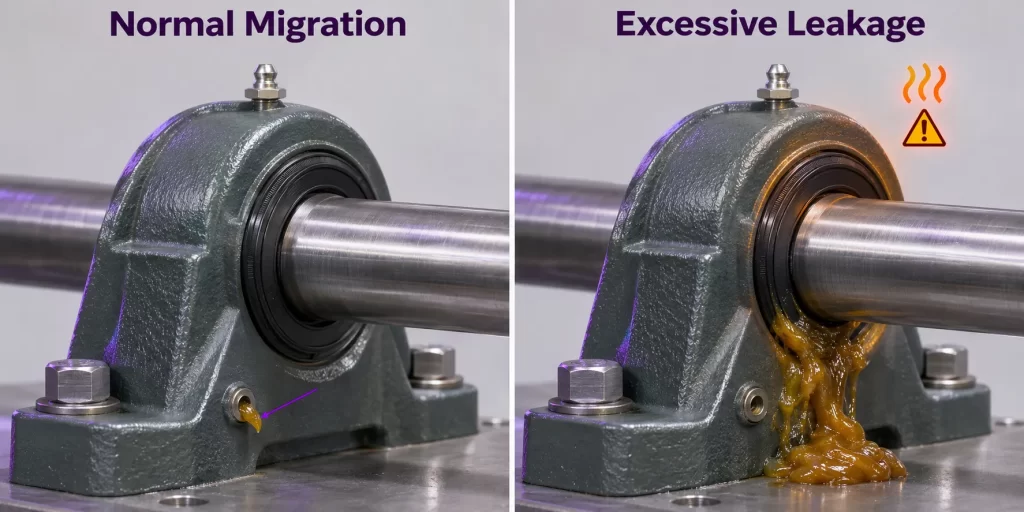
Bearing grease naturally moves within a bearing during operation. During operation, heat, movement, pressure, and centrifugal forces can cause small amounts of grease or oil to migrate.
However, persistent or excessive grease leakage usually indicates that something needs attention.
The most common causes include:
- Over-greasing
- Damaged or worn seals
- Excessive operating temperature
- Incorrect grease consistency
- Incompatible grease
- Excessive bearing speed
- Excessive internal pressure
- Poor-quality or unsuitable grease
- Incorrect bearing installation
Identifying the specific cause is important because simply adding more grease may make the problem worse.
1. Over-Greasing
One of the most common causes of grease leakage from bearings is applying too much lubricant.
A bearing housing needs enough grease to create an effective lubricating film, but filling the available space excessively can create problems.
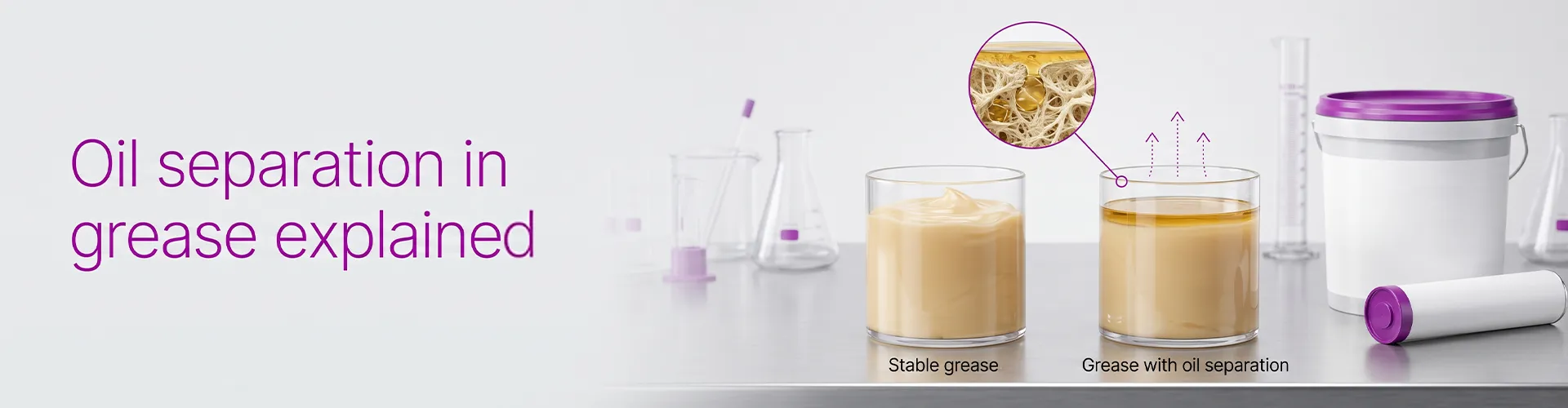
When a bearing rotates, excess grease generates additional resistance and heat. The increased temperature can cause the base oil to separate from the thickener and push lubricant toward the seals.
Signs of over-greasing include:
- Increased bearing temperature
- Grease escaping from seals
- Increased energy consumption
- Unusual noise
- Premature bearing damage
Following the equipment manufacturer’s recommended grease quantity and relubrication interval is therefore important.
2. Damaged or Worn Seals
A bearing seal helps retain grease and prevent contaminants from entering the bearing.
If a seal becomes:
- Cracked
- Hardened
- Torn
- Misaligned
- Worn
grease will escape more easily.
A damaged seal will also allow water, dust, and other contaminants into the bearing, potentially accelerating wear.
If leakage continues despite correct lubrication practices, inspect the seal and surrounding components.
3. High Operating Temperature
Heat can significantly affect grease behavior.
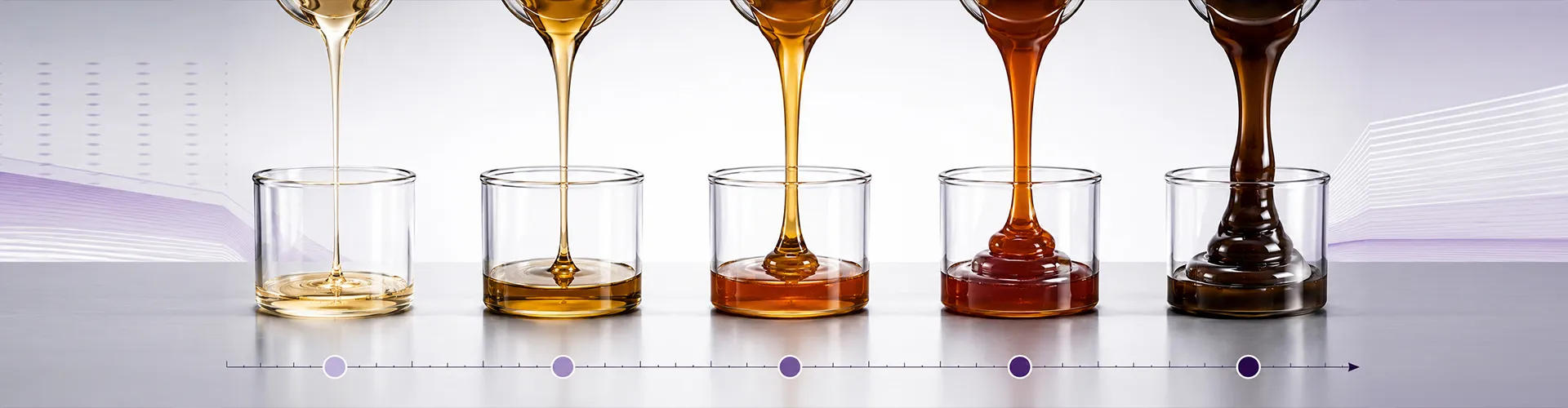
As the temperature rises, the base oil becomes less viscous and may migrate more easily through seals and clearances.
High temperatures can also accelerate:
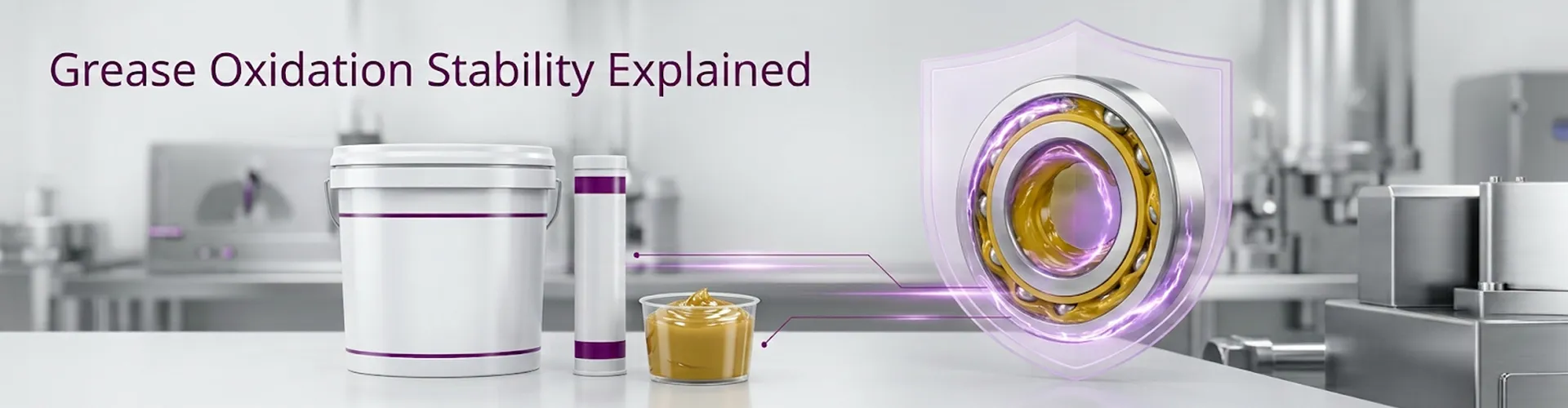
- Oxidation
- Oil separation
- Thickener degradation
- Grease aging
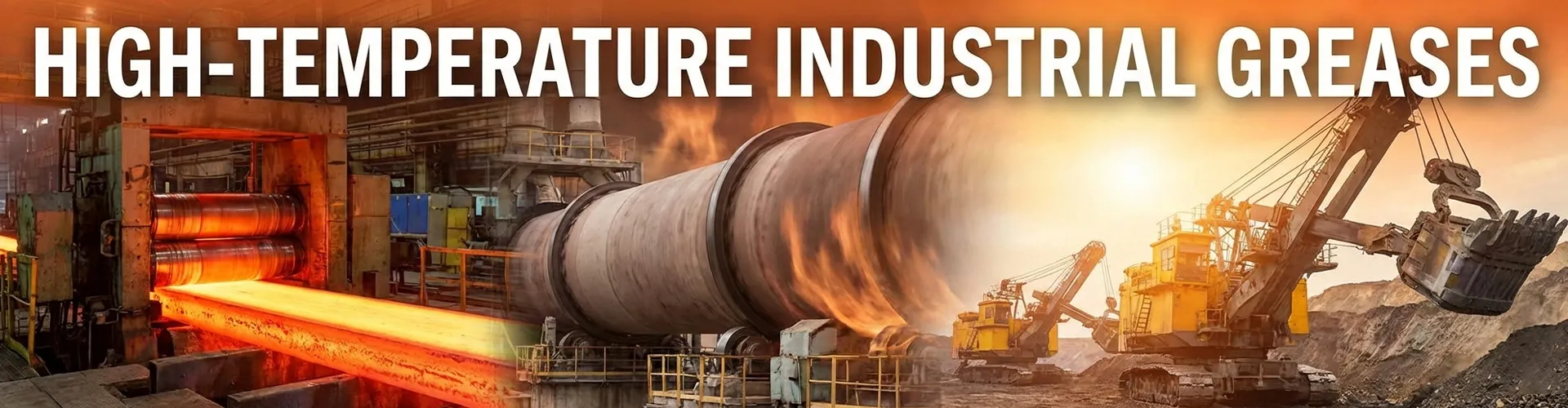
Applications such as steel mills, industrial ovens, electric motors, and high-speed machinery might therefore require grease specifically designed for elevated temperatures.
4. Incorrect Grease Consistency
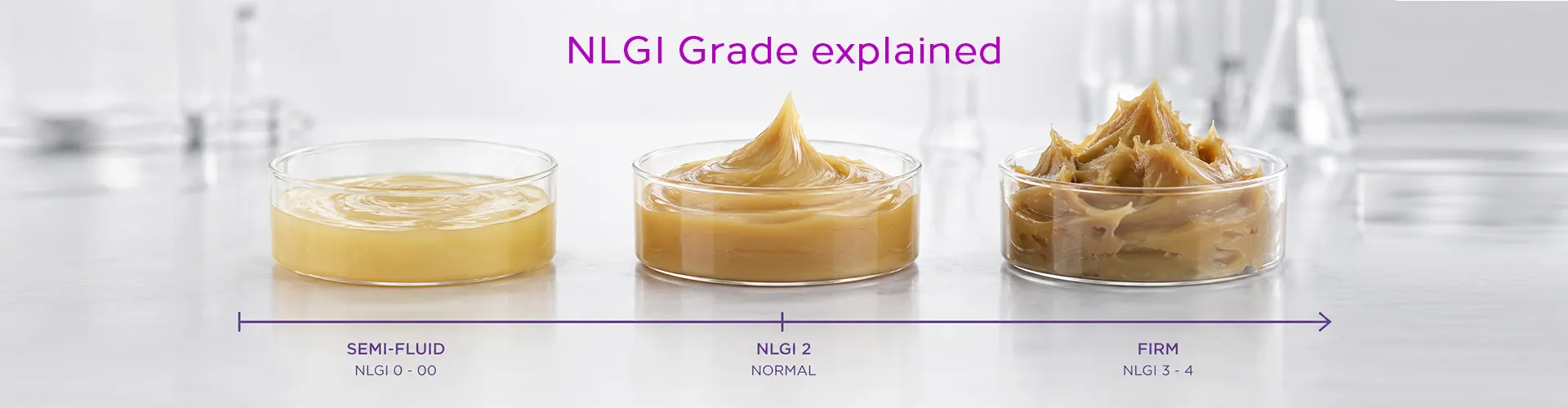
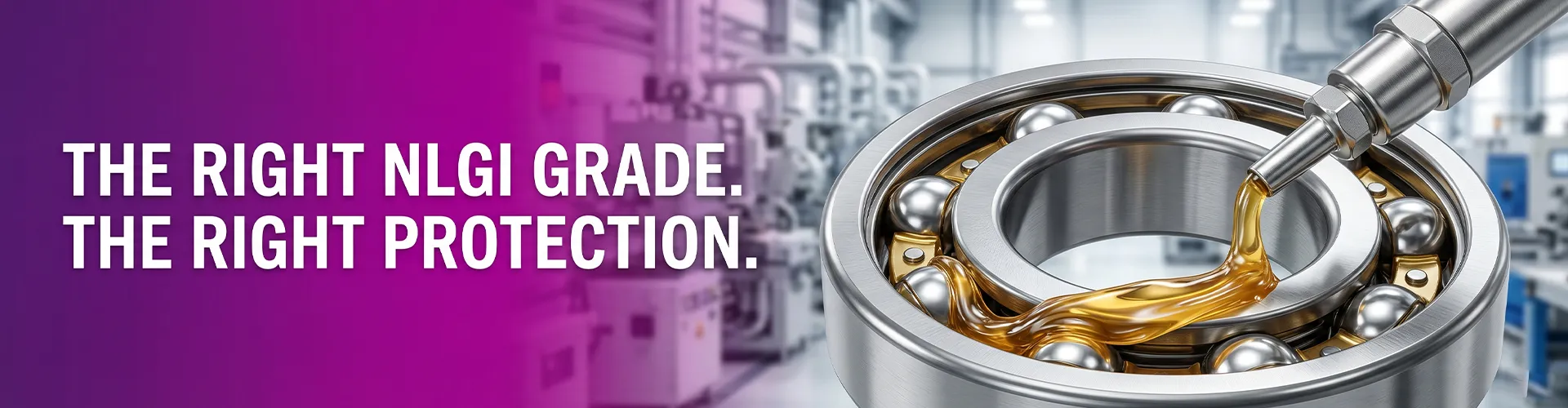
Grease consistency is classified using the NLGI system.
A grease that is too soft for a particular bearing arrangement may migrate or leak more easily.
On the other hand, using grease that is too stiff can increase resistance and interfere with proper lubrication.
The correct NLGI grade should always be selected according to the bearing manufacturer’s recommendations and operating conditions.
5. Incompatible Greases
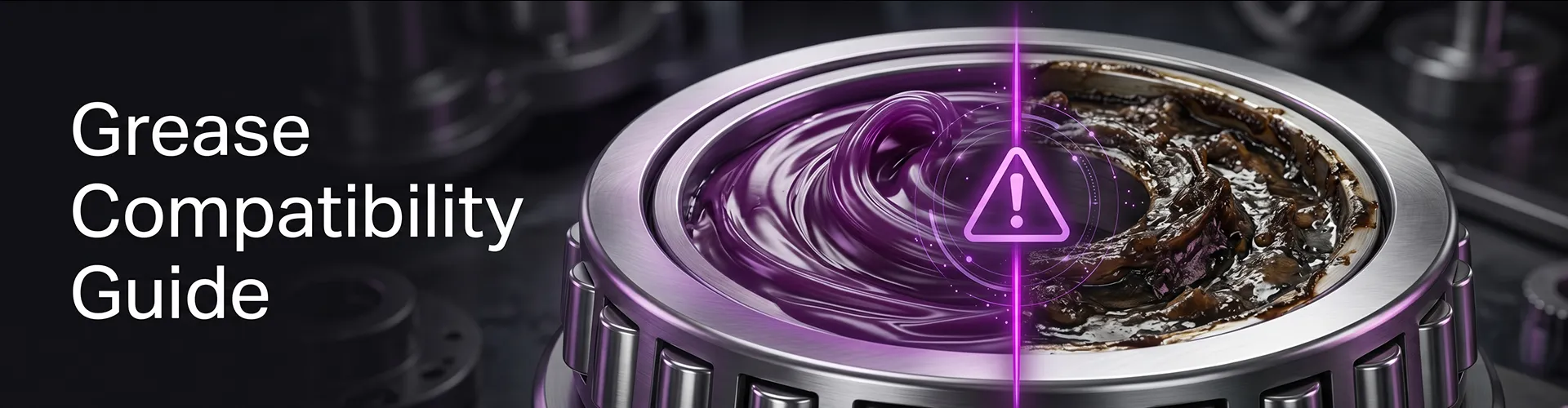
Mixing different grease formulations can create unexpected changes in consistency and performance.
When incompatible thickeners are mixed, the resulting grease might:
- Soften excessively
- Harden
- Release excessive oil
- Lose mechanical stability
- Provide inadequate lubrication
This can contribute to a bearing grease leak or other lubrication problems.
Check the grease compatibility guide and follow an appropriate grease changeover procedure before changing grease products.
6. Excessive Bearing Speed
High-speed bearings generate centrifugal forces that can move grease away from the intended lubrication zone.
High rotational speeds can also increase friction and operating temperature.
For high-speed applications, grease selection should consider the following:
- Base oil viscosity
- Thickener type
- NLGI grade
- Bearing speed
- Operating temperature
A grease designed for high-speed bearings can help maintain more stable lubrication.
7. Excessive Internal Pressure
Pressure inside a bearing housing can force grease past seals.
Pressure may increase because of:
- Overfilling
- Thermal expansion
- Poor housing ventilation
- Incorrect lubrication procedures
In some equipment, blocked vents can prevent pressure from being released properly.
Checking the housing design and lubrication procedure can help identify the source of the problem.
How to Diagnose a Bearing Grease Leak
When grease leakage from bearings is observed, don’t be in a rush to assume that the grease itself is defective.
Use a systematic approach.
Step 1: Check the Amount of Grease
Determine whether the bearing has been over-lubricated.
Review the following:
- Grease quantity
- Relubrication frequency
- Recent maintenance records
Step 2: Inspect the Seal
Look for the following:
- Cracks
- Damage
- Misalignment
- Wear
- Contamination
Step 3: Check Operating Temperature
Measure bearing temperature during normal operation.
An unusually high temperature might indicate the following:
- Over-greasing
- Excessive load
- High friction
- Incorrect grease
- Bearing damage
Step 4: Review the Grease Specification
Check the following:
- NLGI grade
- Base oil viscosity
- Thickener type
- Operating temperature range
- Application recommendations
Step 5: Check for Contamination
Inspect the grease for signs of the following:
- Dirt
- Water
- Metal particles
- Discoloration
- Unusual consistency
Contaminated grease may indicate seal failure or environmental exposure.
How to Prevent Excessive Grease Leakage
Preventing excessive grease leakage starts with correct lubrication practices.
Use the Correct Grease Quantity
More grease does not necessarily mean better lubrication.
Follow the bearing manufacturer’s recommended quantity and relubrication interval.
Select the Correct Grease
Consider the following:
- Temperature
- Speed
- Load
- Water exposure
- Bearing type
- Operating environment
Avoid Unnecessary Grease Mixing
When changing lubricant products, confirm compatibility before introducing the new grease.
Where necessary, remove the old grease and clean the lubrication system according to the appropriate maintenance procedure.
Maintain Seals
Regularly inspect seals and replace damaged components before contamination or grease loss becomes severe.
Control Operating Temperature
If bearing temperatures are unusually high, investigate the underlying cause rather than simply replacing the grease.
Bearing Grease Leakage Prevention Checklist
Before and during maintenance, check:
- Correct grease quantity
- Recommended relubrication interval
- Bearing seal condition
- Suitable NLGI grade
- Correct base oil viscosity
- Operating temperature
- Bearing speed and load
- Grease compatibility
- Housing ventilation, where applicable
- Contamination and storage conditions
- Equipment manufacturer recommendations
Does Grease Leakage Mean the Bearing Is Failing?
Not necessarily.
A small amount of grease around a bearing might occur during normal operation, particularly during initial running-in or after relubrication.
Persistent leakage accompanied by the following signs should be investigated:
- Rising temperature
- Abnormal noise
- Vibration
- Excessive grease loss
- Increased wear
The key is identifying whether the leakage is normal grease migration or a symptom of a larger lubrication or mechanical problem.
Choosing Grease for Bearing Applications
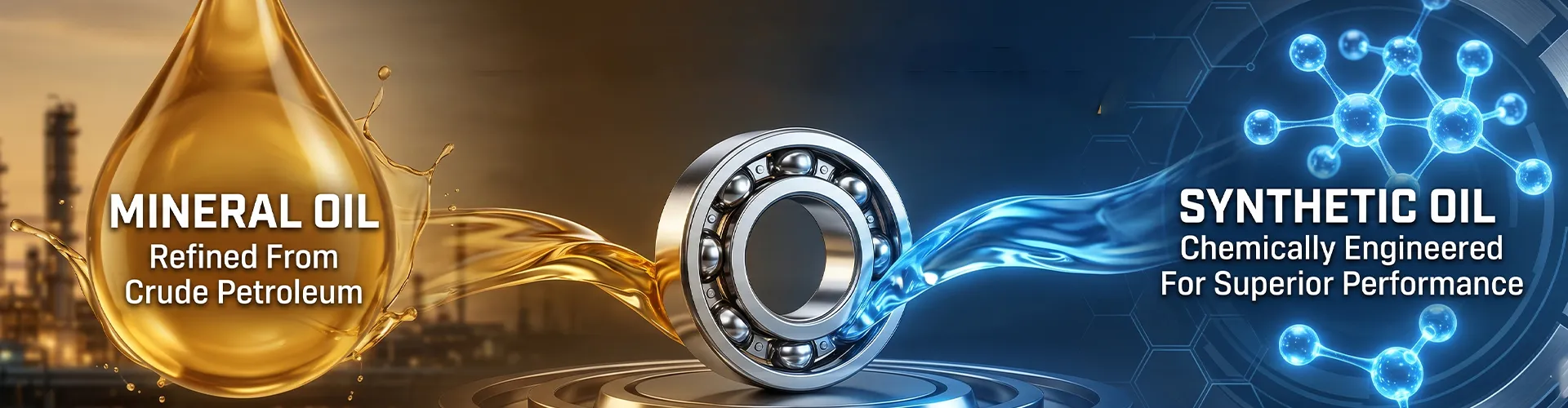
Different bearing applications require different grease technologies.
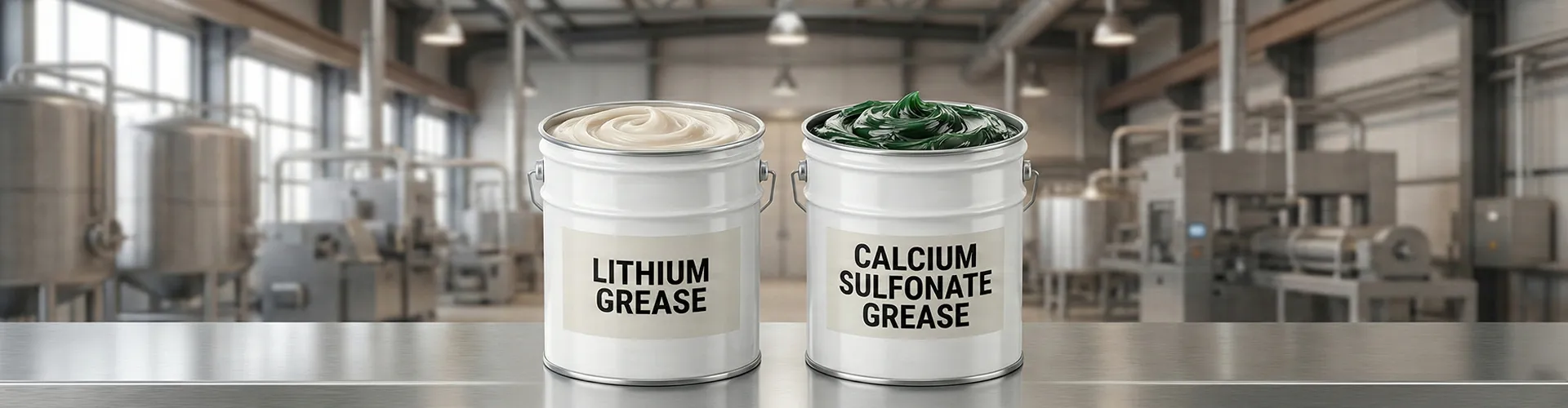
Lithium EP grease can provide a practical combination of wear protection and mechanical stability for general industrial and automotive applications.
Lithium complex EP greases can provide improved load-carrying and temperature performance for heavy-duty applications.
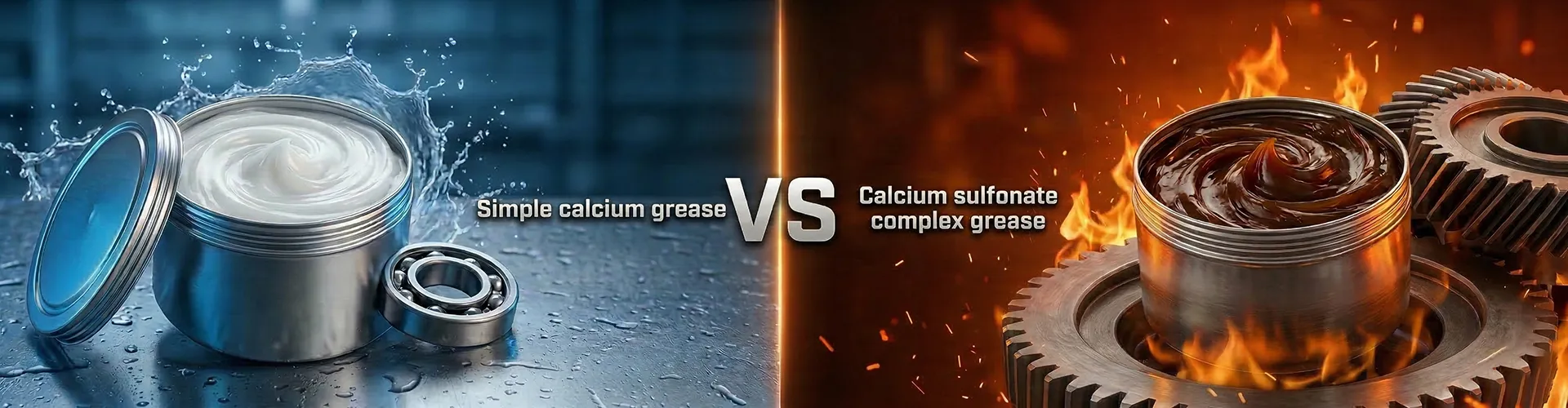
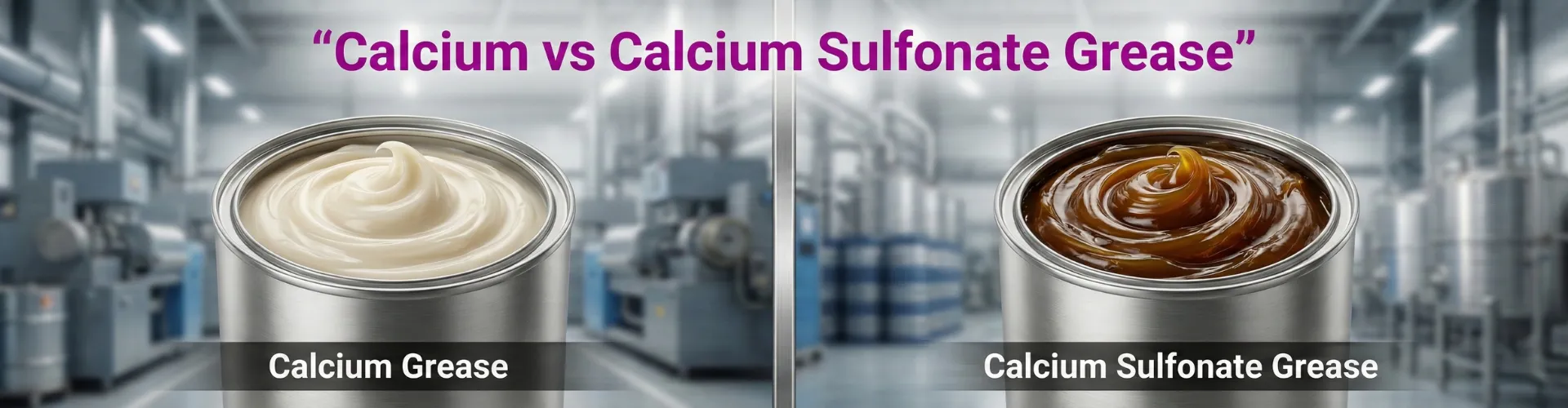
Calcium sulfonate grease may offer advantages in wet or corrosive environments because of its strong water resistance and corrosion protection.
Polyurea grease may be appropriate where the equipment manufacturer specifies this technology for long-life electric motor and bearing applications.
Rexol offers a range of grease formulations designed for different industrial and automotive applications, including Lithium EP, Lithium Complex EP 220, Lithium Complex EP 460, Calcium Sulfonate, Polyurea, and Molybdenum greases.
The correct product should always be selected according to the bearing manufacturer’s specifications and actual operating conditions.
Private Label Grease for Bearing Applications
Bearing lubrication is an important product category for lubricant distributors, industrial suppliers, and aftermarket brands.
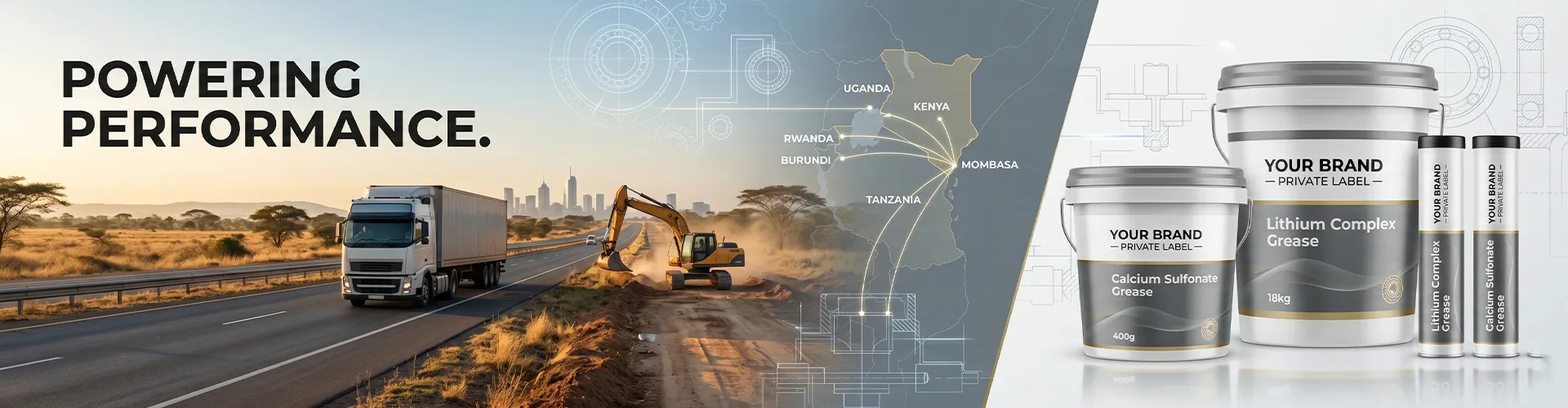
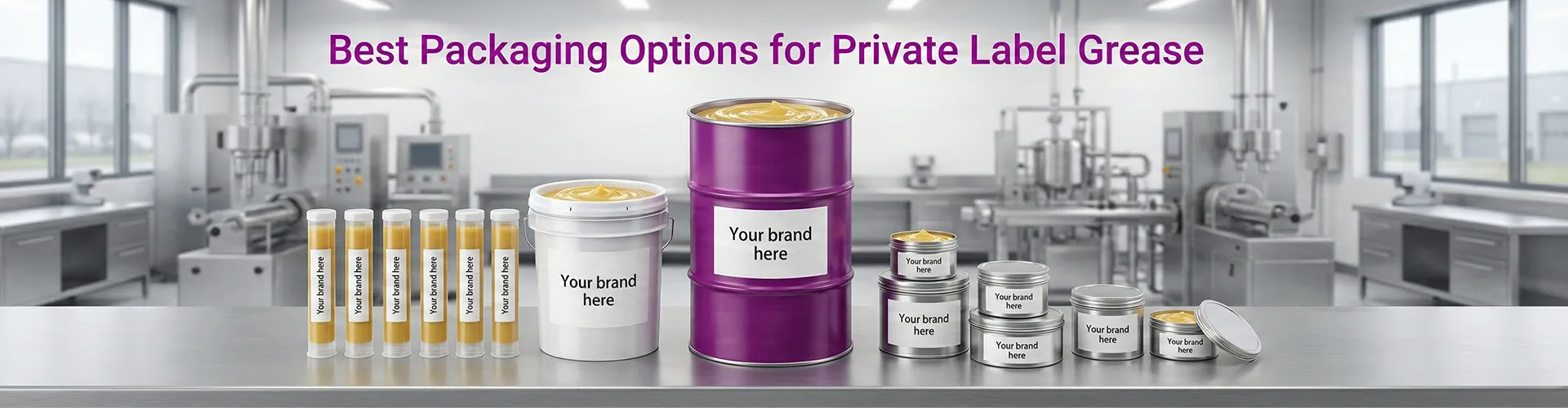
Businesses that want to develop their own lubricant portfolio can use private label manufacturing to offer bearing greases under their own brand.
A private label range can include products for:
- Industrial bearings
- Automotive bearings
- Construction equipment
- Fleet applications
- Agricultural machinery
- Electric motors
- Heavy-duty equipment
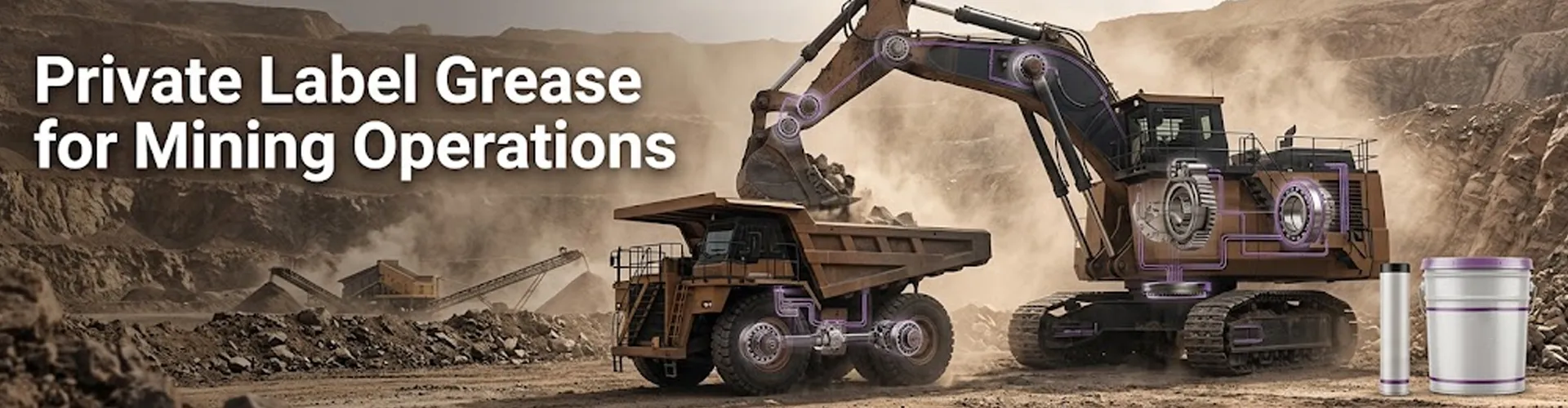
Rexol provides private label grease manufacturing solutions for businesses looking to develop their own branded lubricant products.
If you are planning to launch your own grease brand, Rexol can help you develop a suitable private label grease range based on your target applications, packaging requirements, and market needs.
Final Thoughts
Grease leakage from bearings can result from several different factors, and identifying the root cause is more effective than simply adding or replacing lubricant.
Over-greasing, damaged seals, high temperatures, incorrect grease selection, incompatible products, and excessive bearing speeds can all contribute to a bearing grease leak.
By controlling grease quantities, selecting the correct formulation, maintaining seals, monitoring operating temperatures, and following proper lubrication procedures, maintenance teams can reduce the risk of excessive grease leakage and improve bearing reliability.
For businesses looking to supply high-quality bearing and industrial lubrication products under their own brand, Rexol’s Private Label Grease solutions provide an opportunity to build a complete grease portfolio tailored to specific markets and applications.